
Reviewed · VALENCIA CANYONING TRIPS
Benidorm: Via ferrata Ponoig, cerca de la Nucia
The real thrill here comes at the end: after climbing about 230 metres of near-vertical rock, you must abseil down. The Ponoig route has no simple walking descent, so the 25-metre and 35-metre rope sections are part of the deal, not an optional extra.
I like the small group limit of eight, which gives the guide room to help with the clamps, harness, and abseils. I also like the payoff at the Sleeping Lion, where you can look across Altea, La Nucia, Callosa, and Benidorm. The main consideration is clear: this is not for anyone uneasy with heights, and you should arrive reasonably fit with solid sports shoes.
Key points at a glance
- A 230-metre vertical route: Most of the Ponoig via ferrata climbs straight upward on closely spaced iron clamps.
- Two abseils on the way down: You descend 25 and 35 metres by rope, with no ordinary trail back to the start.
- A K4 challenge: The route has athletic and aerial sections, though the close spacing of the clamps makes the climbing more manageable than the height first suggests.
- Small groups of up to eight: This keeps the activity more personal and allows time for instructions and assistance.
- Wide Costa Blanca views: From the Sleeping Lion, you can see toward Altea, La Nucia, Callosa, and Benidorm.
- A four-hour outing near Benidorm: The meeting point is about 20 minutes from Benidorm, at the Ponoig via ferrata car park.
Starting near Benidorm at the Ponoig car park
The activity begins at the Ponoig via ferrata car park in Polop, roughly 20 minutes from Benidorm. The meeting point is beside a road and marked by a sign. Look for the guides in fluorescent orange Alicante Aventura shirts.
Arrive at least 15 minutes early. That gives you time to find the car park, meet the guide, sort out your gear, and settle your nerves before the group moves off. The stated courtesy period for late arrivals is only five minutes once the activity starts. After that, the guides may have to leave, so this is not the sort of outing where you want to test the local definition of just around the corner.
The drive from Benidorm is short enough to make this an easy half-day plan, but you still need to arrange your own way to the meeting point. The experience does not describe hotel pickup, so do not count on a transfer from your accommodation.
You will be given a helmet, climbing harness, and via ferrata safety set. A medium mountain sports technician leads the activity, and insurance for personal accident and civil liability is included. The group size is limited to eight people, an important detail on a route where participants need to clip onto the safety system and negotiate vertical sections in sequence.
More Costa Blanca day trips from Valencia
- From Valencia: Peniscola Day tour, Game of Thrones
★ 4.8 · 233 reviews - Valencia City Excursion – From Albir, Benidorm & Calpe
★ 4.5 · 146 reviews - From Valencia: Day Tour in Peniscola, Game of Thrones
★ 4.5 · 122 reviews
Getting ready for a K4 climb
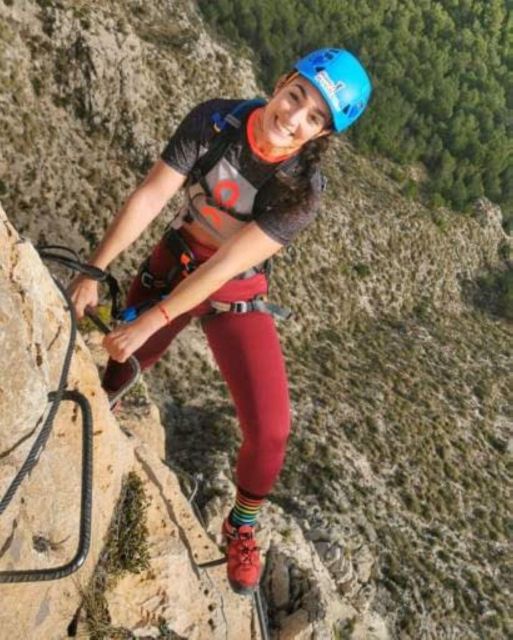
Ponoig is graded K4 and runs for approximately 230 metres. The route is split into two clearly different sections, but both are vertical. You are not following a gentle mountain path with occasional metal aids. You are climbing upward on iron clamps fixed into the rock.
The clamps are close together, which helps. The height makes the route look more dramatic than technically difficult in places, because you usually have a reachable hand or foothold nearby. Still, you should expect some athletic movement and exposed sections. The supplied description specifically points to aerial passages, so you need to be comfortable working above the ground while attached to the safety cable.
I would treat the K4 grade as a useful warning rather than a dare. You do not need to be an elite climber, but you should be in decent physical shape and ready to keep moving for several hours. One participant specifically advised arriving fit and wearing good shoes, which is sound guidance here.
Wear sports clothing that allows your legs and shoulders to move freely. Bring water, snacks, sunscreen, and a small daypack. The route is an outdoor activity with a long vertical section, so leaving heavy or awkward bags behind is sensible. Sports shoes are listed as essential equipment from your side. Choose footwear that feels secure rather than casual shoes with a smooth sole.
The first vertical section and the iron clamps
Once the climb begins, the number of clamps becomes obvious. You will use them for both hands and feet, moving upward one hold at a time while the via ferrata safety set keeps you connected to the route.
This is where the activity feels different from an ordinary hike. The distance covered may not look huge on a map, but vertical metres demand more from your arms, legs, and concentration. The close spacing of the clamps helps you find the next move, yet the exposure gives the route its punch.
Your guide will provide the technical supervision and safety equipment, and the instructors speak Spanish, English, and French. The language mix can vary within a group, so pay close attention during demonstrations and ask for a repeat if you need one. One participant found that careful watching helped when the guide was speaking Spanish, while another said the instructors made a point of explaining things in English. That suggests a practical approach: confirm your language needs before setting out, then stay alert during each safety instruction.
The pace can be steady. One participant described the group as moving at a fairly high pace, but not too high. That may suit you if you prefer an active outing rather than long pauses. If you are new to via ferrata, the route may feel intense at first, but the combination of close clamps and a guide-led group gives you a clear task: move carefully to the next hold.
Reaching the Sleeping Lion viewpoint
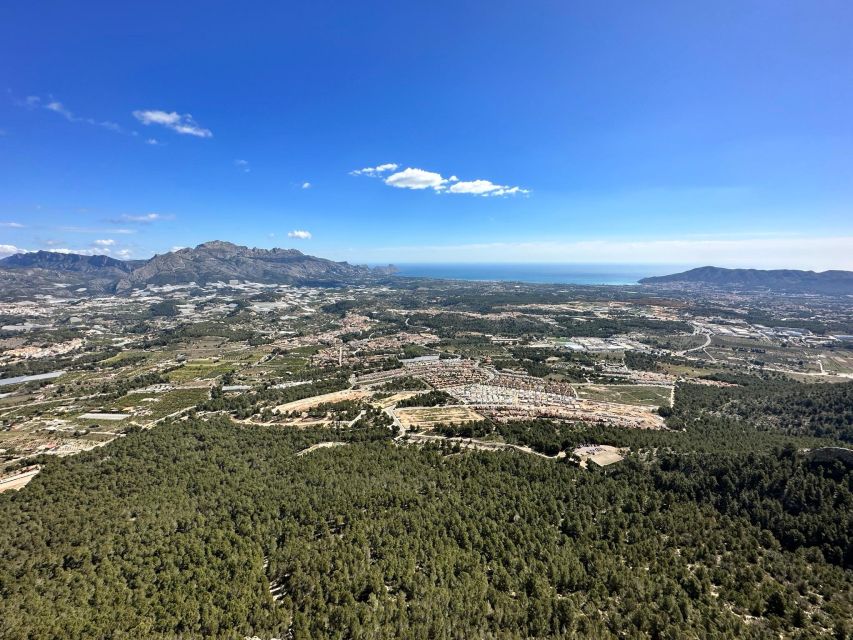
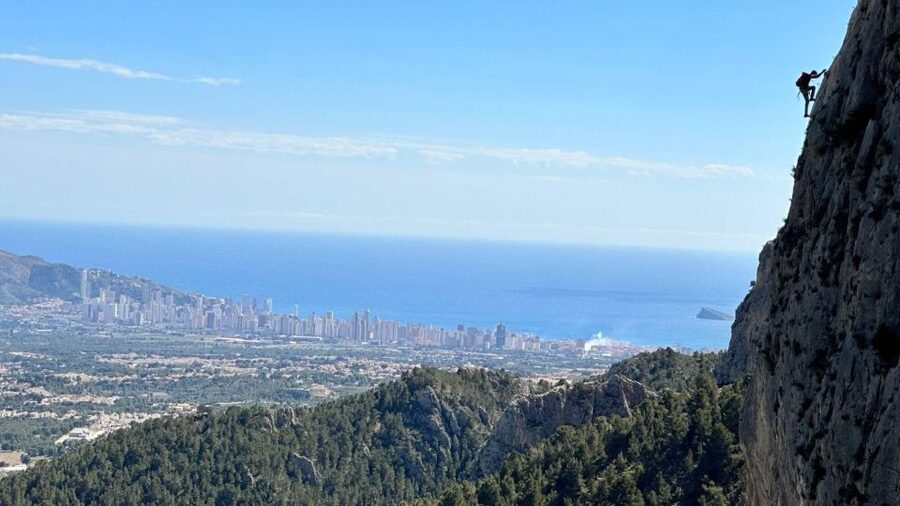
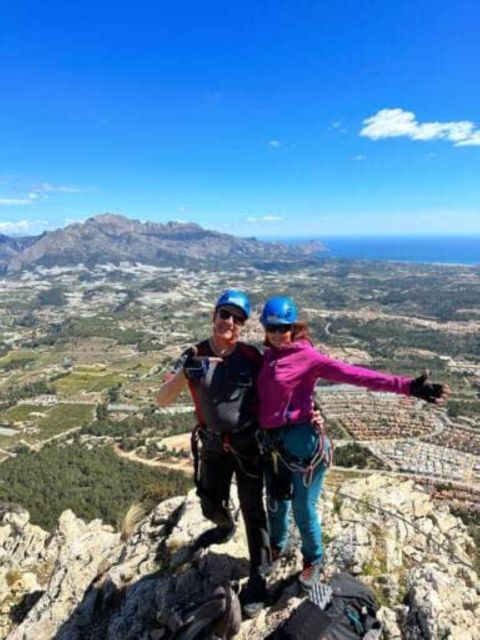
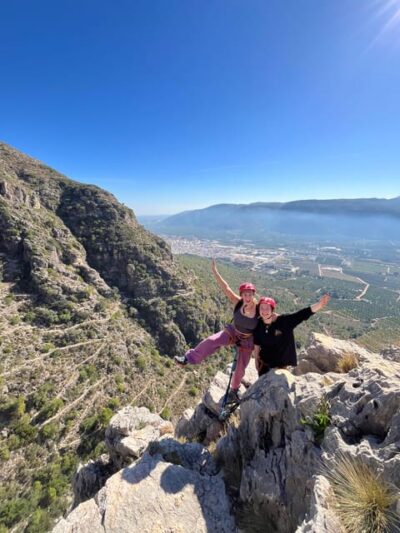
The top is called the Sleeping Lion, and it is the reward for the two climbing sections. From this viewpoint, you can see across a broad stretch of the Costa Blanca, with Altea, La Nucia, Callosa, and Benidorm in the distance.
This pause matters because the climb is not only about technical movement. You get a chance to breathe, look back at the route, and take photographs from a high point. Photos of the activity are included and are sent through WhatsApp by a link once the reception staff have them. The link format helps preserve image quality, though the timing of delivery is not specified.
I would use this viewpoint to slow down. The climb can make you focus so closely on the next clamp that you forget to look around. At the Sleeping Lion, you can finally take in the full setting and mark the achievement before facing the descent.
The views are one of the strongest reasons to choose this particular route near Benidorm. You get a far different angle on the Costa Blanca than from a beach promenade or town lookout. Benidorm appears in the distance, while Altea, La Nucia, and Callosa help you place the surrounding area.
More canyoning trips from Valencia
- Anna: amazing water canyoning experience near Valencia
★ 4.8 · 33 reviews - Canyoning experience in Barranco del Gorgo de la Escalera
★ 5.0 · 12 reviews - Valencia Canyoning. Experience for everyone
★ 4.6 · 12 reviews - Aquatic canyoning near Benidorm. Estret de les Penyes Bollulla
★ 5.0 · 7 reviews
Why the descent is the real test
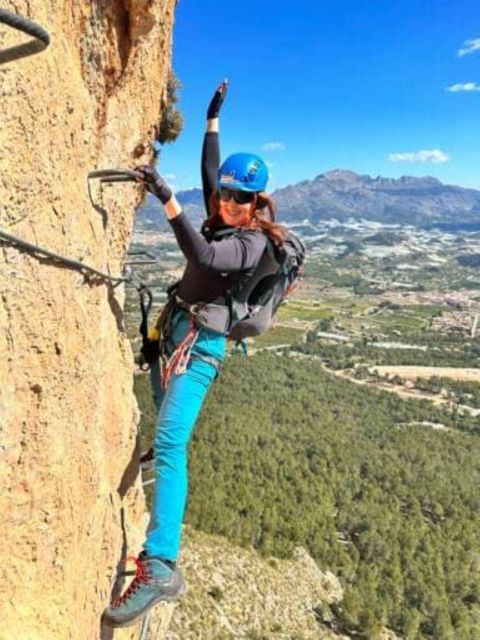
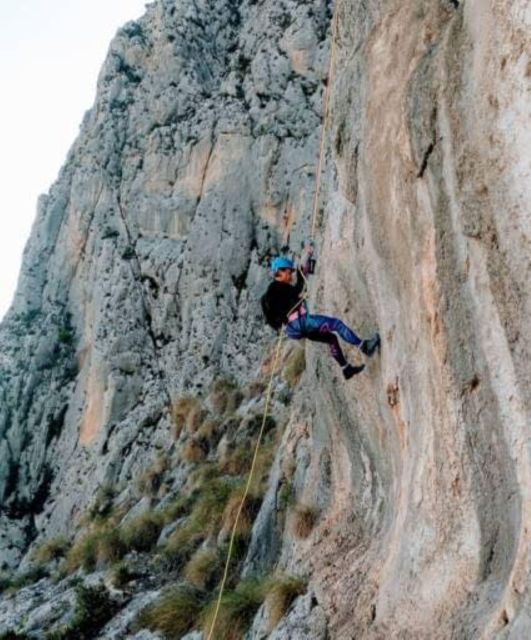
Many via ferratas end with a walking route down. Ponoig does not. After reaching the top, you follow a mountain path to an area with abseiling ropes, then descend 25 metres and 35 metres.
For some people, this is the best part. For others, it is the point where the activity changes from a demanding climb into a serious test of nerve. You need to be prepared before booking: abseiling is not optional on this route.
The guide handles the technical setup and gives you the instructions needed for each descent. Your job is to follow those instructions, trust the equipment, and control your movement as you go down. The two distances are substantial enough to create a strong sense of exposure, especially if you are not used to looking down from a rope.
The descent also gives the experience a pleasing shape. You climb vertically, reach a viewpoint, then return by a different method instead of simply retracing a path. That makes the four-hour outing feel like a complete mountain route rather than a short climb followed by an ordinary walk.
If you have vertigo, this is the clearest reason not to book. Pregnant women are also specifically excluded from the activity. If heights make you uncomfortable but you are unsure how you will react, think carefully about the two abseils, not just the climb itself.
Guides, group size, and the human side
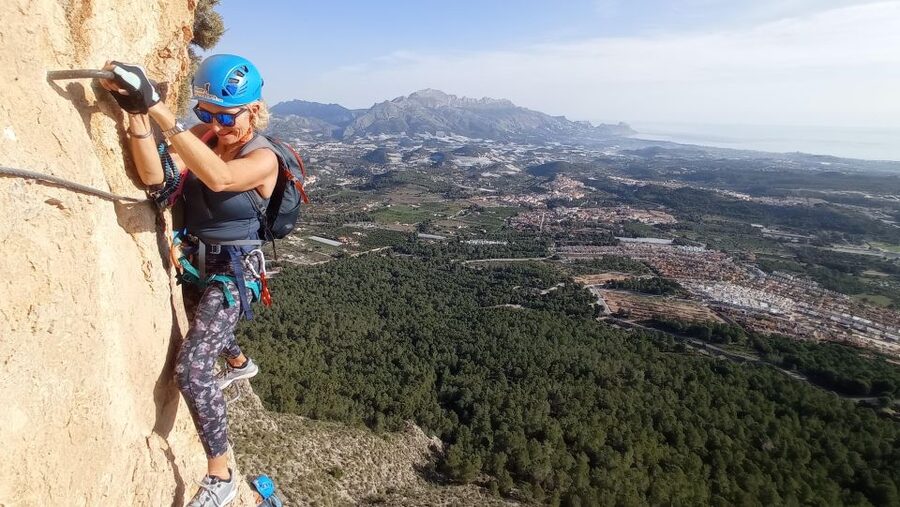
A small group can make a big difference on a technical activity. With up to eight participants, you are less likely to feel lost in a crowd, and the instructor can keep track of progress during the climb and rope sections.
The guide team has received especially strong praise for being supportive and good company. Toni was singled out for making the outing enjoyable and for leading the group to the top. Vincent was also described as supportive and fun. Another solo participant arrived to find that she was the only fluent English speaker in the group, yet Donny and another instructor made an effort to explain things in English and include her.
That is useful information if you are booking alone. The group may contain people with different language levels, but the stated guide languages are Spanish, English, and French. You should still make your language preference clear at booking, especially if this is your first via ferrata.
The warm guide interaction seems to be a major part of the experience. The route itself supplies the height and views, but good instruction matters most when you are clipping onto a cable or preparing for a 35-metre abseil. A calm, attentive guide can turn a nerve-racking moment into a manageable one.
What $65 includes, and where the value lies
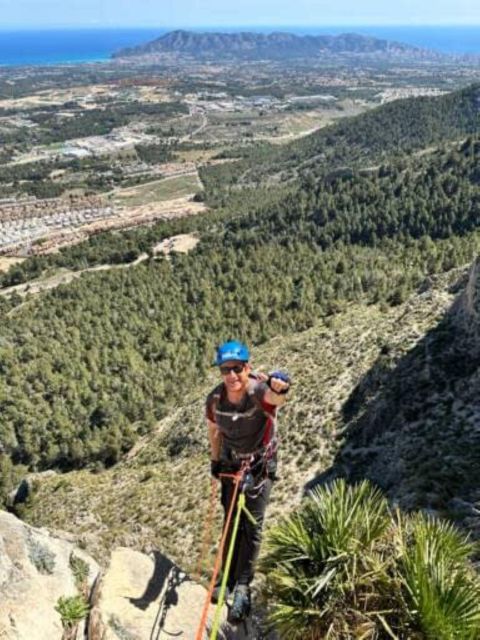
At $65 per person, the price covers four hours of guided activity, technical equipment, personal accident and civil liability insurance, and activity photographs. You also receive the services of a medium mountain sports technician and entry to the listed via ferrata access.
I consider that a fair price if you want a properly supervised experience and do not own climbing equipment. Buying or renting a helmet, harness, and via ferrata safety set separately would make the package less convenient, while the guide provides the technical framework for a route that includes two abseils.
The value is also tied to the route itself. You are not paying only for a scenic walk near Benidorm. You are paying for a vertical climb, a high viewpoint, equipment, supervision, and two rope descents. If you want a relaxed outdoor excursion, this is not the best use of $65. If you want a focused four-hour challenge with a strong sense of achievement, the price makes more sense.
Photos are a useful extra for anyone who wants a record of the climb without carrying a camera in the middle of a technical section. They are sent by WhatsApp link after the reception staff have them, so you should not assume they arrive immediately at the end.
Who should book Ponoig
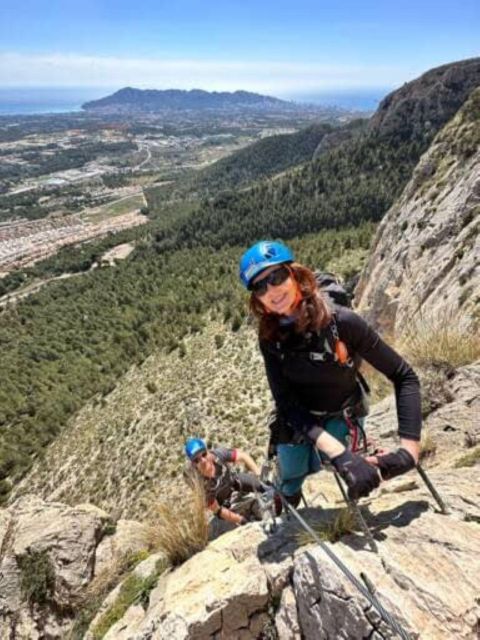
I would recommend this activity to you if you meet three conditions: you are reasonably fit, you are comfortable with heights, and you want an active outing rather than sightseeing from ground level.
It suits solo participants, couples, and small groups who like a physical challenge. The four-hour length gives the experience enough time to feel substantial without taking up a full day. Its location near Benidorm also makes it practical during a Costa Blanca stay.
First-time via ferrata participants can join, but you should not confuse first time with easy. The close clamps may make the vertical movement accessible, yet the K4 grade and mandatory abseils still require concentration. Read the route description carefully and be honest about how you feel on exposed ground.
It is not suitable for pregnant women or people with vertigo. You also need sports shoes, water, sunscreen, snacks, and sportswear. Those details sound basic, but being underprepared is more noticeable when you are several metres above the ground.
Booking is flexible: you can cancel up to 24 hours in advance for a full refund, and a reserve-now, pay-later option is available. If you miss the meeting point and do not notify the operator within the stated time, you may lose the booking, so plan the drive to Polop carefully.
My take: book it if the abseils excite you
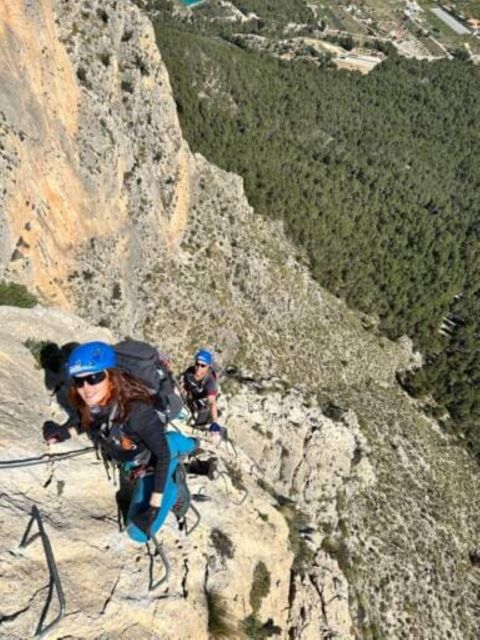
I would book the Ponoig via ferrata if the thought of climbing iron clamps and then descending 25 and 35 metres by rope sounds exciting rather than alarming. The route offers a clear challenge, strong Costa Blanca views, and a different way back down.
The best parts are the close-spaced clamps, the Sleeping Lion viewpoint, the small group format, and the supportive guide team, including Toni and Vincent. The main weakness is also the feature that makes the route special: you cannot avoid the abseils.
If you want a gentle half-day in the hills, choose another activity. If you want to finish with a big smile and a real sense of achievement, Ponoig is a strong choice near Benidorm.
FAQ
Where is the Ponoig via ferrata?
It is in Polop, about 20 minutes from Benidorm in the Valencian Community of Spain. The meeting point is the Ponoig via ferrata car park.
How long does the activity last?
The activity lasts approximately four hours. Starting times depend on availability.
How difficult is the route?
The Ponoig via ferrata is graded K4. It is about 230 metres long, with two vertical sections and athletic, aerial passages.
Do I have to abseil?
Yes. The route does not have a normal walking descent. You follow a mountain path to the rope area and abseil 25 metres and 35 metres down.
What views can I expect?
From the Sleeping Lion viewpoint, you can see across the Costa Blanca toward Altea, La Nucia, Callosa, and Benidorm.
What equipment is included?
A helmet, climbing harness, and via ferrata safety set are included. A medium mountain sports technician also leads the activity.
What should I bring?
Bring snacks, water, sunscreen, sportswear, sports shoes, and a daypack.
What languages do the guides speak?
Instruction is available in Spanish, English, and French.
Is the activity suitable for people with vertigo or pregnant women?
No. The activity is not suitable for people with vertigo or pregnant women.
Just added to the Valencia listings
- Visit the most beautiful village in Valencia: Chulilla★ 5.0 · 14 reviews
- Walking Tour through Valencia’s Historic Centre★ 5.0 · 19 reviews
- Windsurf class on Valencia beach★ 4.3 · 4 reviews
- Valencia: World of Illusions Museum Entrance Ticket★ 4.0 · 22 reviews
- Valencia: Guided Mountaineering Experience★ 3.7 · 4 reviews
- Valencia: Gourmet Food & Wine Tour★ 4.2 · 6 reviews
- VALENCIA ESSENZIALE + SITI PATRIMONIO UMANITÀ (ITALIANO)★ 4.7 · 3 reviews
- Valencia: Wine Gogh Glow Academy Paint and Sip Classes★ 4.2 · 18 reviews
Valencia Canyoning Trips, compared.
Anna: amazing water canyoning experience near Valencia
Read our review →
Canyoning experience in Barranco del Gorgo de la Escalera
Read our review →
Aquatic canyoning near Benidorm. Estret de les Penyes Bollulla
Read our review →
Browse the lists this tour appears in