
Reviewed · WORKSHOPS
Make Authentic Espadrilles in Valencia
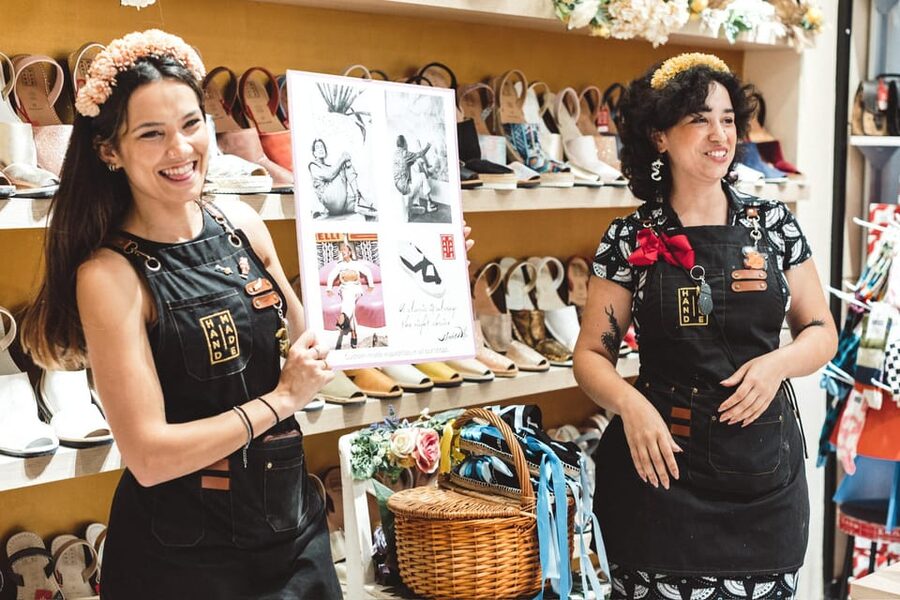
The best part of this Valencia workshop is that you leave with a pair of espadrilles you helped personalize, not just another souvenir from a shop shelf. In a real workshop at Plaça de la Reina, artisans explain the shoe’s place in Spanish culture, then guide you through choosing colors, threading ribbons, and wearing the shoes in traditional ways.
I like the friendly, hands-on teaching and the useful final product. I also like the small-group feel reported in the sessions, sometimes as few as six people, plus the relaxed touch of cava, snacks, sweets, and water. The main catch is important: you are not building an espadrille from raw materials. The shoe base is already made, and your work centers on decorating it and fitting the ankle ribbons.
Key details before you book
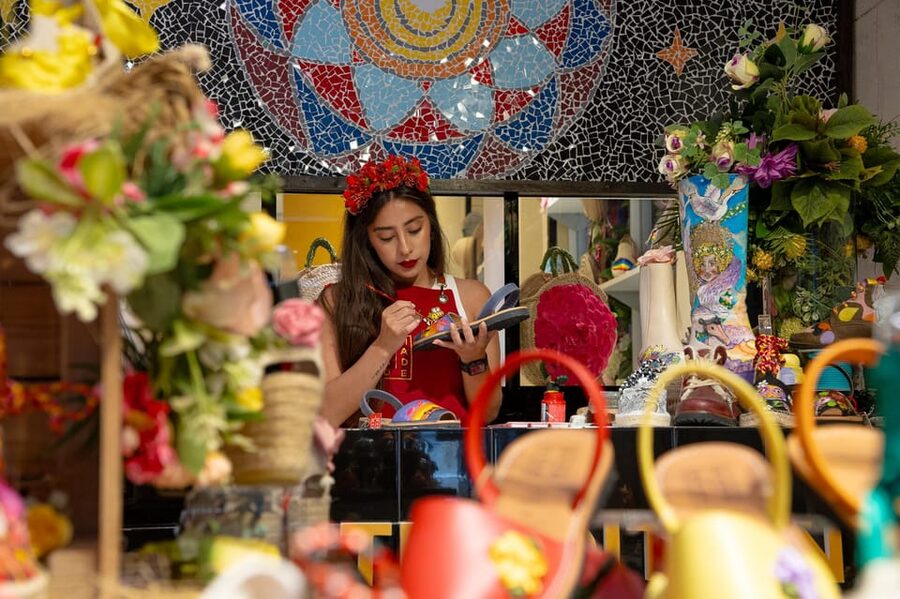
- You personalize a finished espadrille base: The workshop focuses on ribbons, color, style, and lacing rather than cutting and constructing the shoe from scratch.
- You work in Plaça de la Reina: The meeting point is Pça. de la Reina, 18, in Valencia’s Ciutat Vella.
- You choose your look: Options include different colors and styles, such as open-back or closed designs, with many ribbon colors available.
- You get expert help throughout: Artisans show the technique, explain traditional ways to wear the shoes, and assist as you work.
- Cava and snacks are included: Alcoholic drinks are served only to adults aged 18 and over.
- The workshop lasts about two hours: The hands-on portion takes roughly 90 minutes, with the full visit lasting approximately two hours.
What you actually make in the Plaça de la Reina workshop
The word make needs a little explaining here. You do not cut cloth, shape the sole, or assemble every part of an espadrille. Instead, you begin with a prepared espadrille base and turn it into your own pair through decoration and lacing.
That is not a flaw by itself. Traditional espadrille construction takes skill and time, and a short city workshop could not reasonably take you from raw jute sole to finished shoe. The prepared base means you can leave with a wearable pair rather than a rough first attempt.
Still, you should book this with the right picture in mind. If you want a true shoemaking class, this is too light. If you want a cultural craft activity with a practical souvenir, it fits much better.
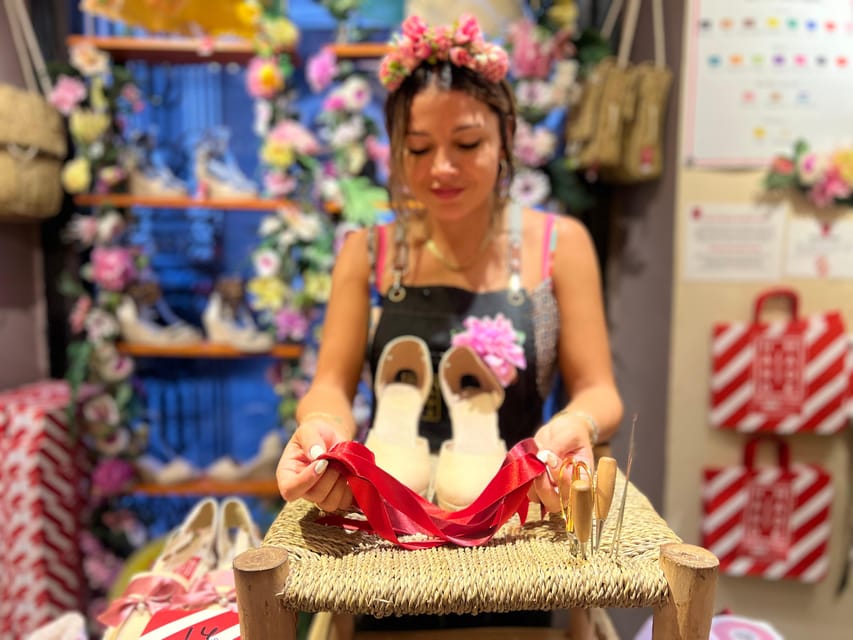
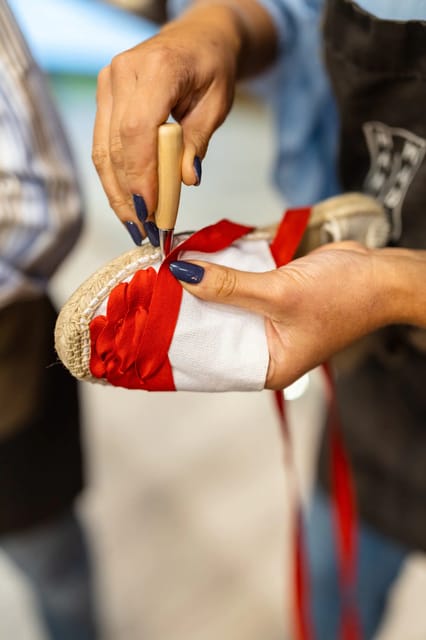
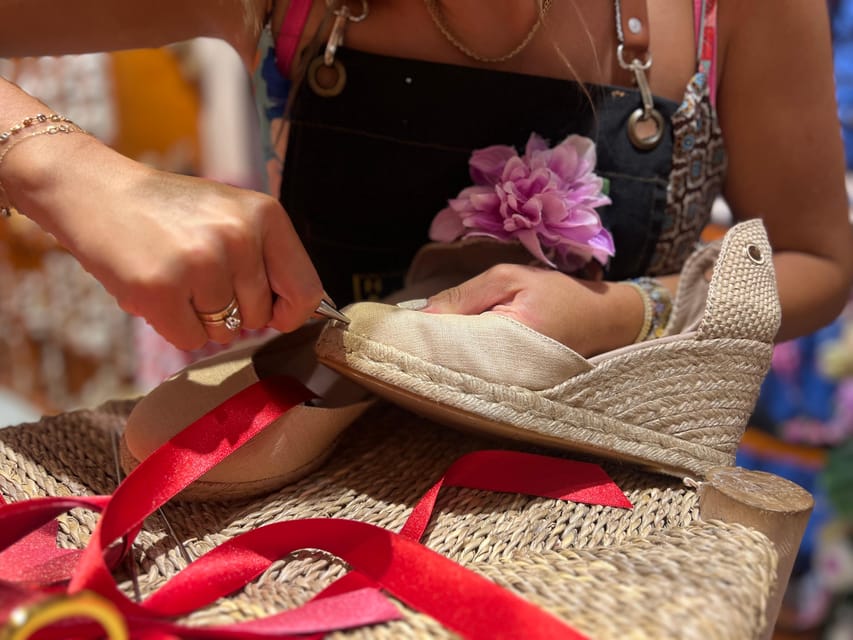
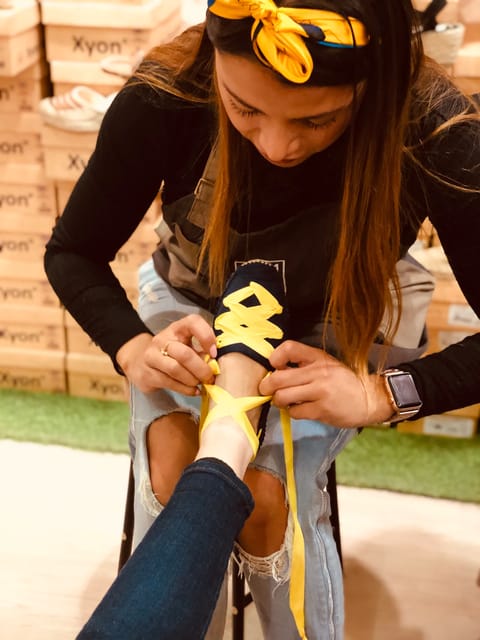
The process includes making holes in the shoe and threading the ribbons through them. The ribbons tie around your ankles and help secure the shoes. You can select the espadrille style and color, then choose from a range of ribbon colors. Some pairs are open at the back, while others have a closed design.
The choice seems to be a real part of the fun. You are not handed one fixed style and told to decorate it in one prescribed way. You get room to create a look that suits you, though the exact selection may depend on what is available during your session.
More hands-on workshops in Valencia
- Paella Cooking Class, Wine Tasting & Central Market in Valencia
★ 5.0 · 1,150 reviews - Valencian paella cooking class, tapas and visit to Ruzafa market.
★ 5.0 · 828 reviews - Valencia: Paella Cooking Class with Central Market Tour
★ 5.0 · 721 reviews
A short lesson in Spanish shoe culture
Before the needle comes out, the artisans explain where espadrilles fit into Spanish life, fashion, and local tradition. That background gives the craft more meaning than simply adding colored ribbon to a canvas shoe.
The instructors also show different traditional ways to wear the ribbons. This is one of the more useful parts of the workshop because the lacing is not only decorative. How you tie the ribbons changes the look and affects how the shoes sit on your feet.
Anna and Sofia have led sessions, while Luis and Kathe have also been named as instructors. The teaching style is lively and patient, with plenty of help as you work. You can ask questions as you go rather than trying to copy a demonstration from across a crowded room.
That matters because threading and lacing can feel awkward at first. The workshop is aimed at ordinary visitors, not trained craftspeople. Most people can take part, and the hosts are there to correct the technique and keep the pace comfortable.
Choosing your espadrilles and ribbon colors
The design stage may be the most enjoyable part for anyone who likes clothes, color, or small creative decisions. You choose the type of shoe, its color, and the ribbon. Available options include open-back and closed styles, along with several espadrille colors.
The ribbon selection adds personality. You might choose a shade that blends with the shoe for a classic look, or use a contrasting color for something more playful. The choice can take longer than expected, in a good way, because the ribbon changes the character of the finished pair.
There is one practical point to keep in mind. Not every ribbon will appeal to every person. One unhappy participant found the shiny polyester ribbon cheap-looking, while other comments praised the finished shoes and enjoyed the wide range of color choices. If material quality matters a great deal to you, ask the instructor about the ribbon options before you begin.
This is also where the workshop differs from a standard shopping stop. In a shop, you pick a finished pair. Here, you spend time deciding how the pair should look, then attach the ribbons yourself. The result carries a memory of Valencia, even though the base shoe was made in advance.
The hands-on 90 minutes
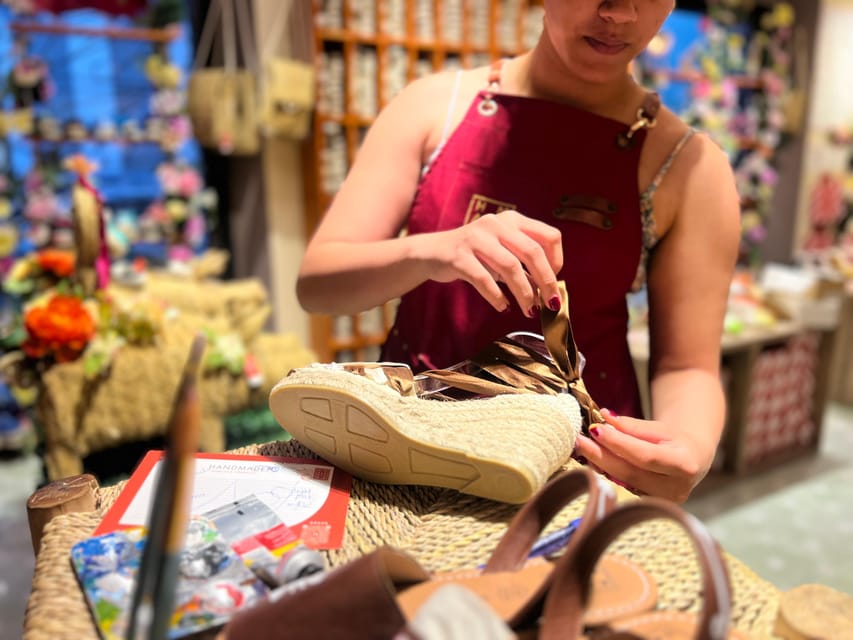
The practical session takes about 90 minutes inside the workshop. You receive an apron, an espadrille needle, ribbon laces, and the espadrille base. The artisans then guide you through the steps.
The needle and holes make the activity simple enough for most people, but it is still a craft task rather than a demonstration. You have something to do with your hands for most of the visit. That makes this a good break from sightseeing, especially if you have already spent the morning looking at churches, museums, and old streets.
The instructors help with the fiddly parts. They also keep the mood relaxed with conversation, explanations, and humor. Sessions can be intimate, with one reported class containing six people, though the stated maximum is 25. A smaller group should give you more direct help and make it easier to ask questions.
Do not assume every booking will have only a handful of people. The maximum allows for a much larger class, so the atmosphere may vary by date. If personal attention is your top concern, booking well ahead may improve your chances of getting the date and session you want. This activity is often booked about 38 days in advance.
Same city, a completely different afternoon:
- Valencia: Oceanogràfic Entry Ticket
★ 4.7 · 9,893 reviews - Valencia: 24 or 48-Hour Hop-on Hop-off Bus Ticket
★ 3.9 · 5,611 reviews - Valencia: Palosanto Flamenco Show Ticket
★ 4.8 · 3,876 reviews - Valencia: Catamaran Cruise with Sunset Option
★ 4.0 · 3,566 reviews
Cava, snacks, and the social side
The included refreshments make the workshop feel more like a relaxed cultural visit than a formal class. Adults aged 18 and over can have cava, and traditional snacks are included. Water and sweets are also provided.
The food is not the reason to pay for the workshop, but it adds comfort and conversation. A small charcuterie platter has been served alongside the sparkling wine, creating an easy pause while you compare colors and work on your shoes.
If you do not drink alcohol, the craft remains the main event. The listing specifies cava for adults, but it does not promise a particular nonalcoholic replacement. If that matters to you, ask the provider before booking.
There is also an optional upgrade costing 30 euros per person for free-flowing cava and extra food. I would treat this as a social add-on rather than a necessary improvement. The basic activity already includes cava and traditional snacks, so the upgrade makes sense mainly for a celebration or a group that wants to linger over drinks.
Location and timing in central Valencia
The workshop meets at Pça. de la Reina, 18, in Ciutat Vella. Plaça de la Reina is a central, historic square, and the location makes this easy to combine with a day of sightseeing in Valencia’s old center.
You do not need private transportation. The meeting point is near public transport, and the activity ends back where it begins. That simple start and finish are useful if you are planning another appointment afterward, though I would still leave a little extra time rather than schedule something immediately after the two-hour estimate.
The mobile ticket is convenient. Confirmation arrives when you book, so you can keep the entry details on your phone. The workshop is offered in English, which makes the cultural explanations and craft instructions accessible to English-speaking visitors.
The meeting address is specific, but central squares can still be confusing if you are rushing. Arrive early enough to find number 18 and get settled. You will enjoy the opening explanation more if you are not arriving breathless with your phone in hand.
Is the 107.90 dollar price fair?
At $107.90 per person, this is not a cheap souvenir activity. You are paying for a guided workshop, a finished personalized pair of espadrilles, refreshments, and access to a working artisan setting in central Valencia.
The value depends on what you compare it with. If you only want a pair of shoes, you may find less expensive options in local shops. If you want a short cultural activity that gives you something useful to take home, the price is easier to justify.
The pair of espadrilles is the main value. You are not leaving with a paper craft or a trinket that will sit in a drawer. You get footwear you can potentially wear, provided the style and fit work for you. Several sessions produced shoes that participants considered attractive and practical.
I would not pay this amount expecting a full shoemaking apprenticeship. You are paying for guided personalization, cultural context, refreshments, and the story attached to the finished pair. That is a fair deal for the right kind of visitor, but a poor deal if your main goal is learning every stage of espadrille construction.
Who will enjoy this most?
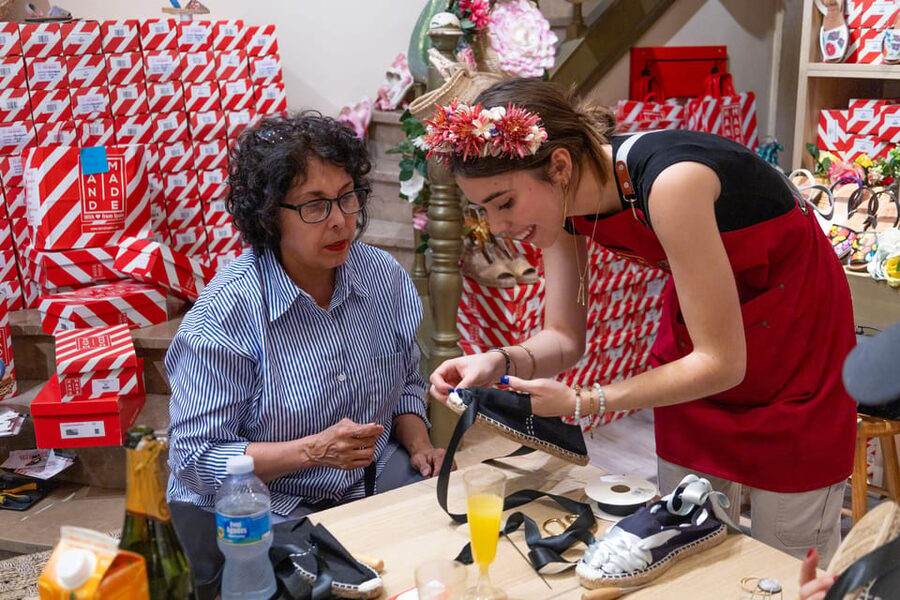
I would recommend the workshop to couples, friends, parents with older children, and anyone who likes a creative activity with a clear result. It also works well for a small celebration, since the cava and shared design decisions give the visit a social feel.
It suits people who enjoy local traditions but do not want a long museum lecture. You learn about the shoe’s past and cultural meaning while doing something practical. The activity is also a good fit for a rainy afternoon or for a day when you want to slow the pace.
You should think twice if you dislike handwork, have very limited time, or want a serious construction class. The prepared base may disappoint anyone expecting to cut fabric or build the sole. The ribbon method is more like decorating and finishing than making a shoe from the beginning.
Most people can take part, and service animals are allowed. The supplied details do not explain every physical requirement of the workshop, so contact the provider if you need specific arrangements beyond that.
A clear look at the strengths and limits
The strongest part is the combination of instruction and personal choice. You learn how espadrilles are worn, choose your design, and finish with a pair linked to your time in Valencia.
The instructors are another major strength. Anna, Sofia, Luis, and Kathe have been described as warm, energetic, patient, and easy to follow. Names can vary by session, but the teaching approach is clearly central to the activity.
The refreshments add a pleasant touch, and the central location keeps the logistics simple. The workshop is offered in English, ends at the starting point, and accepts mobile tickets.
The chief weakness is the marketing language around making espadrilles. You are not making the entire shoe from scratch. You are customizing an existing base, attaching and threading ribbons, and learning about the tradition behind the footwear. I consider that a worthwhile activity, but only if the description is understood accurately.
Should you book the espadrille workshop?
Book it if you want a personal Valencia souvenir, enjoy light craft work, and like the idea of learning from local artisans in a friendly setting. The combination of design choices, cultural background, cava, snacks, and a finished pair gives the two hours a clear purpose.
Skip it if your dream is to construct an espadrille from raw materials. You will be disappointed by the prepared shoe base and the focus on ribbon work. At this price, the distinction matters.
For everyone else, this is a thoughtful way to spend part of a Valencia day. Choose it for the experience and the story attached to the shoes, not because you are enrolling in a shoemaking course. Free cancellation is available up to 24 hours before the start time, which gives you some flexibility while planning.
FAQ
Where does the espadrille workshop meet?
It meets at Pça. de la Reina, 18, Ciutat Vella, 46003 València, Valencia, Spain.
Where does the activity end?
The activity ends back at the meeting point in Plaça de la Reina.
How long does the workshop last?
The full activity takes approximately two hours. The hands-on artisan portion lasts about 90 minutes.
Is the workshop offered in English?
Yes. The experience is offered in English.
Do I make the espadrilles completely from scratch?
No. You receive an espadrille base and personalize it with ribbon work, holes, and lacing. The workshop does not include building the shoe from raw materials.
What is included in the price?
The experience includes an apron, an espadrille needle, ribbon laces, an espadrille base, artisan assistance, cava for adults aged 18 and over, traditional snacks, and a personalized pair of espadrilles.
Can I choose the color and style?
Yes. Available choices include different espadrille colors and styles, such as open-back and closed designs, along with a selection of ribbon colors.
Is private transportation included?
No. Private transportation is not included. The meeting point is near public transportation.
What is the cancellation policy?
You can cancel for a full refund up to 24 hours before the experience start time. Cancellations or changes made less than 24 hours before the start time are not accepted for a refund.
Just added to the Valencia listings
- Visit the most beautiful village in Valencia: Chulilla★ 5.0 · 14 reviews
- Walking Tour through Valencia’s Historic Centre★ 5.0 · 19 reviews
- Windsurf class on Valencia beach★ 4.3 · 4 reviews
- Valencia: Guided Mountaineering Experience★ 3.7 · 4 reviews
- Valencia: World of Illusions Museum Entrance Ticket★ 4.0 · 22 reviews
- Valencia: Gourmet Food & Wine Tour★ 4.2 · 6 reviews
- VALENCIA ESSENZIALE + SITI PATRIMONIO UMANITÀ (ITALIANO)★ 4.7 · 3 reviews
- Valencia: Wine Gogh Glow Academy Paint and Sip Classes★ 4.2 · 18 reviews
Workshops, compared.
Paella Cooking Class, Wine Tasting & Central Market in Valencia
Read our review →
Valencian paella cooking class, tapas and visit to Ruzafa market.
Read our review →
Valencian paella workshop and visit to the Algiros market
Read our review →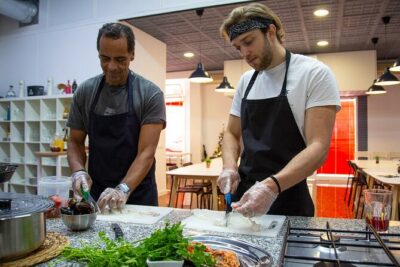
Seafood paella cooking class, tapas and visit to Ruzafa market.
Read our review →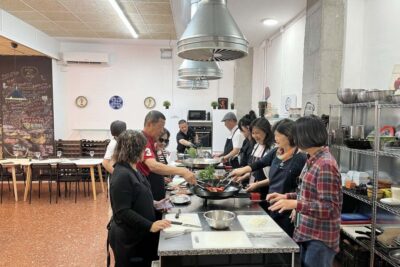
Evening Guided Paella Workshop, Tapas, and Drinks
Read our review →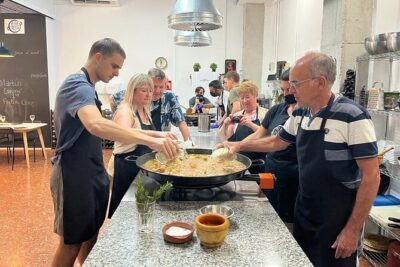
Valencian Paella Cooking Class, Tapas & Sangria – Evening
Read our review →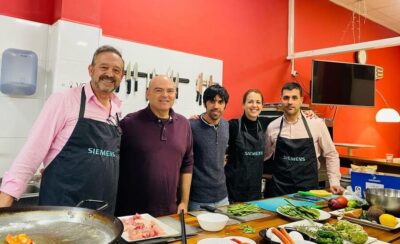
Browse the lists this tour appears in