
Reviewed · VALENCIA
Citrus Treasures: Exploring Valencia’s Orange Grove
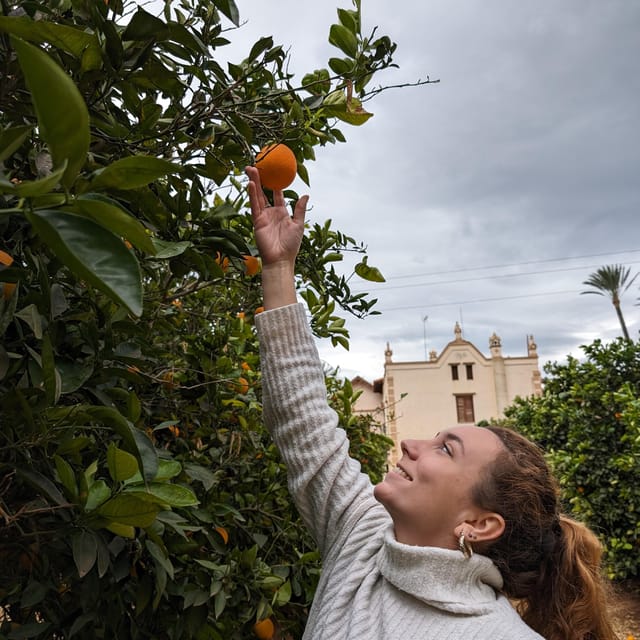
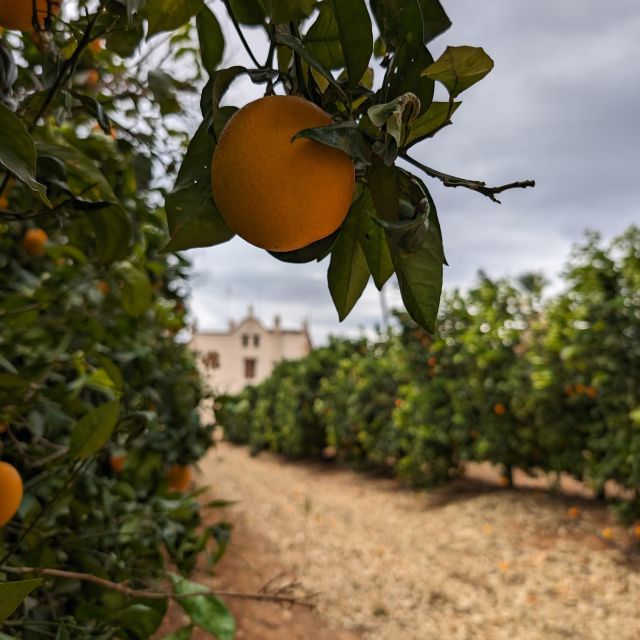
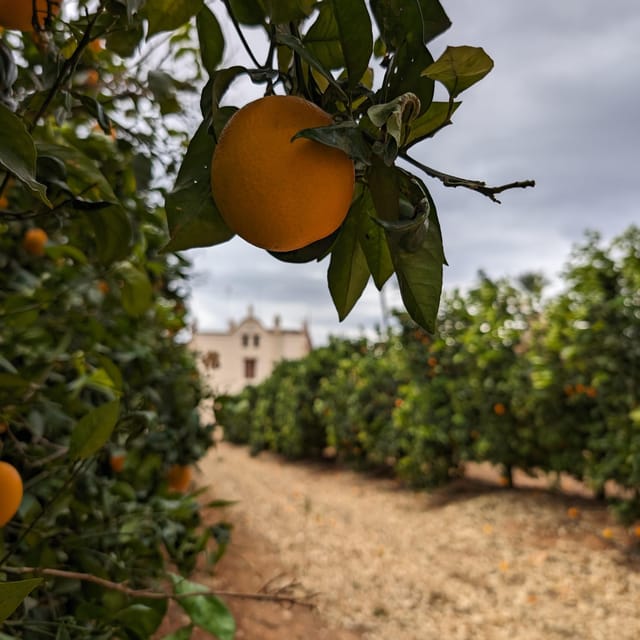
The best part of this experience is its setting: an 1870 Modernist house surrounded by working citrus fields in La Ribera, Valencia’s agricultural heartland. You get more than a quick orchard walk. The visit links architecture, farming, local food, and the story of Valencia’s most famous fruit.
I like the hands-on orange packing and the tasting of fresh juice, homemade jams, orange blossom honey, and Valencian liqueurs. I also like the chance to see unusual fruit such as Buddha’s hand and citrus caviar, not just the standard oranges and tangerines. The main consideration is that this is a countryside visit, not a city sightseeing tour, and the meeting point changes with the option you book.
Key points at a glance
- 1870 Modernist house: Begin with an eclectic historic home that gives the orchard a strong sense of place.
- Unusual citrus fruit: See oranges and tangerines alongside avocados, Buddha’s hand, and citrus caviar.
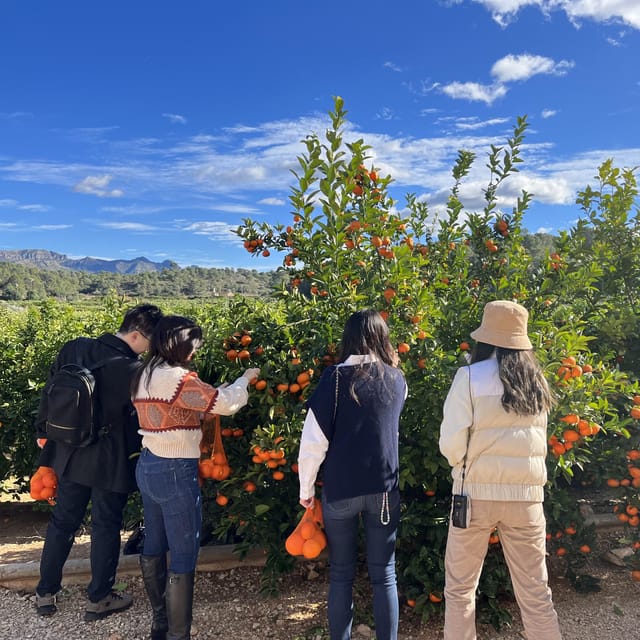
- Hands-on packing: Calibrate and pack a box of oranges, choosing the fruit you want to bring home.
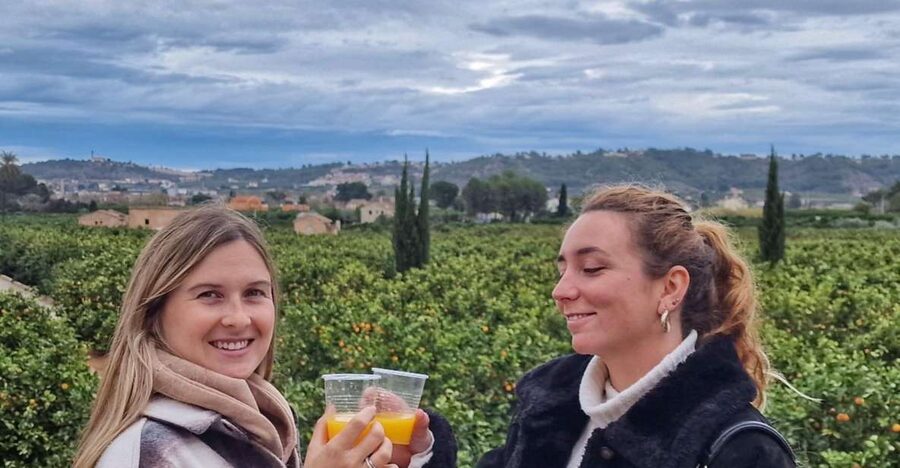
- Food-focused tasting: Sample natural juice, homemade jams, orange blossom honey, and Valencian liqueurs.
- Small four-hour outing: Groups are limited to 15, with English and Spanish guides available.
- Family-friendly subject: The fruit, gardens, tasting, and packing activity give children something active to do.
A 1870 house opens the story of Valencia’s oranges
This outing starts with a building rather than a basket of fruit. The 1870 Modernist house brings architecture into a visit that could otherwise feel like a simple farm tour. Its eclectic style helps explain the setting and gives you a look at the kind of country estate connected with Valencia’s agricultural past.
You should expect the house to be one part of the visit, not the entire focus. The main attraction is the estate around it, where gardens, fields, and citrus trees create the backdrop for the rest of the morning or afternoon. If you enjoy old buildings but want more than an indoor tour, this combination works well.
The visit also puts La Ribera on the map. Valencia is often reduced to its city center, beaches, paella, and futuristic architecture. La Ribera offers a different side of the region, with farming and river-country traditions shaping daily life and local food.
Your guide explains how the orange became tied to Valencia’s identity. That context matters because it turns the fruit in your hand into part of a larger local story. You learn about cultivation, different varieties, and the role of citrus in Valencian agriculture rather than simply hearing a few facts before a tasting.
More orchard and farm visits near Valencia
- Valencia: Orange Farm and Orchard Trip with Tastings
★ 4.9 · 702 reviews - Live an Experience Among Orange Trees in Huerto Ribera
★ 5.0 · 27 reviews
Walking through orchards, gardens, and unusual fruit
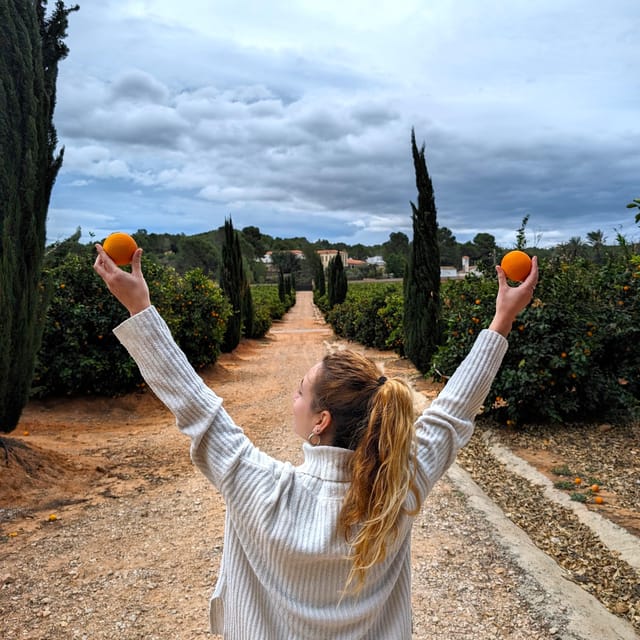
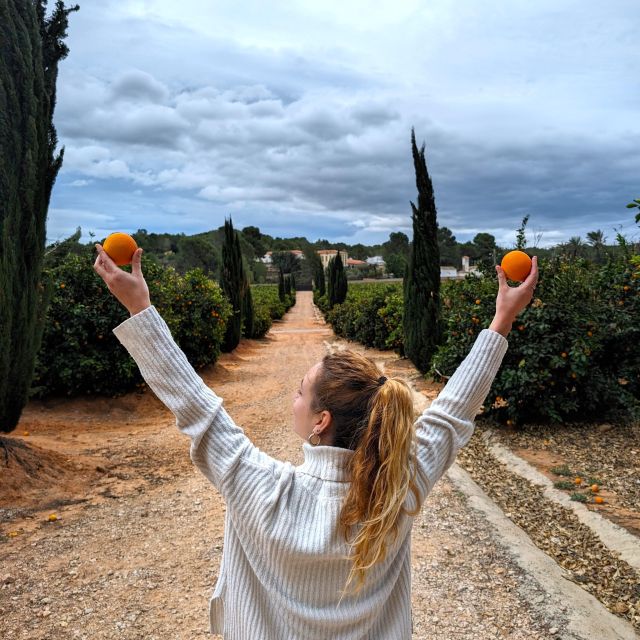
The guided walk takes you through the estate’s romantic fields and gardens. The pace appears designed for looking closely rather than covering a large distance quickly. You can expect plenty of time to notice the trees, scents, fruit, and changing character of the grounds.
The orchard includes familiar citrus such as oranges and tangerines, but the range goes well beyond those staples. You may see avocados, Buddha’s hand, and citrus caviar among the plantings. These less common fruits give the visit a useful point of comparison. You begin to see how different citrus varieties vary in shape, use, and cultivation.
Buddha’s hand is especially memorable for its finger-like form. Citrus caviar is another unusual sight, with small bead-like sections that look very different from the fruit most people associate with Valencia. The experience does not require you to be a serious gardener. Curiosity is enough.
The orchard walk also helps you understand that oranges do not simply appear in markets under a regional label. They are grown, assessed, sorted, packed, and presented for use. That practical side of agriculture becomes clearer later when you take part in the box-packing activity.
Because the group is capped at 15 people, the guide should have a better chance to keep the walk personal and manageable. A small group is useful here. You can hear explanations among the trees, ask about a fruit, and follow the activity without the feel of a large coach excursion.
Tasting juice, jam, honey, and Valencian liqueurs
The tasting is one of the strongest reasons to choose this visit. It includes natural orange juice, homemade jams, orange blossom honey, and Valencian liqueurs. That lineup shows the fruit in several forms, from a simple fresh drink to preserved and distilled products.
The juice gives you the cleanest sense of the orchard’s produce. The jam shows how oranges can be turned into something sweeter and more concentrated. Orange blossom honey connects the fruit trees with the wider work of pollination, while the liqueurs introduce a distinctly local aftertaste to the session.
I like tastings that explain how a product fits into its region, and this one appears to do that through variety rather than quantity. You are not just handed a drink and sent on. The food helps tie together the walk, the farming story, and the estate’s setting.
Keep in mind that liqueurs are part of the tasting. If you do not drink alcohol, the juice, jams, and honey still give you several nonalcoholic elements to enjoy, but the supplied details do not specify substitutions or separate tasting arrangements. Ask when booking if that matters to you.
The tasting also makes the tour appealing to people who are less interested in agricultural detail. A child may care more about juice and fruit than cultivation methods, while an adult may appreciate the connection between the produce and local traditions. That balance helps make the outing suitable for families.
Choosing and packing your own orange box
The most hands-on part comes when you help with calibration and packaging. Rather than simply buying a prepared souvenir, you take part in choosing your favorites and arranging them in an orange box to bring home.
Calibration refers to sorting fruit by size and quality. You do not need previous farm experience. The value is in seeing a routine agricultural task up close and understanding the work behind a neatly packed box in a shop.
This activity gives the tour a clear souvenir. Many food experiences finish with a taste and leave you with a memory. Here, you can carry a physical part of the estate with you. The supplied information describes the oranges as the finest Valencia oranges, but you should think of the box as a farm product selected during the visit rather than a generic retail purchase.
For families, this section adds a simple task that children can follow. They can look at the fruit, choose favorites, and see how it is prepared for transport. For adults, it offers a more direct connection with local agriculture than a standard orchard photo stop.
You should also plan sensibly for carrying the box after the experience. The details do not state its size or weight, so avoid assuming it will fit easily into a small day bag. If you have a full day of sightseeing afterward, ask the operator about handling it.
Same city, a completely different afternoon:
- Valencia: Oceanogràfic Entry Ticket
★ 4.7 · 9,893 reviews - Valencia: 24 or 48-Hour Hop-on Hop-off Bus Ticket
★ 3.9 · 5,611 reviews - Valencia: Palosanto Flamenco Show Ticket
★ 4.8 · 3,876 reviews - Valencia: Catamaran Cruise with Sunset Option
★ 4.0 · 3,566 reviews
Why the four-hour format works
Four hours gives the visit room to combine the house, orchard, tasting, history, and packing activity without forcing everything into a short stop. A shorter tour might show you the trees and offer juice, but it would have less time for the agricultural explanation and hands-on work.
The length is also long enough to feel like a countryside outing while remaining manageable for most families. You are not committing a full day to one estate. That makes it a useful choice between city sightseeing days, especially if you want to see a quieter side of the Valencian Community.
Transportation is included, which can make the $82 price easier to assess. The cost covers transport, an official guide, a guided visit to the orange garden, the tasting, and the orange-packing experience. The exact meeting point varies by the option booked, so check that detail before you set out.
At $82 per person, this is not the cheapest way to see an orange tree. Its value depends on how many parts you will use. If you want only a quick orchard walk, the price may feel high. If you care about the historic house, unusual fruit, guided explanations, tasting, transportation, and take-home oranges, the package makes more sense.
The small-group limit also matters. With no more than 15 people, the price buys a more focused setting than a large bus tour. The experience is best judged as a half-day food and countryside excursion, not as a simple farm admission ticket.
A good fit for food lovers and families
This is a natural match for citrus lovers. If you enjoy comparing flavors, learning how food is grown, or bringing home regional products, the visit gives you several ways to engage.
It also suits history enthusiasts who prefer buildings connected to their surroundings. The 1870 house adds an architectural layer, while the guide’s account of Valencia’s orange tradition gives the fruit a cultural setting.
Families can find plenty to hold their attention. The gardens provide room to look around, the unusual fruit sparks questions, and the packing activity offers something practical to do. The four-hour length is long enough to feel worthwhile but not so long that the whole day disappears.
This may be less suitable if you want a fast, highly scheduled tour of Valencia’s major monuments. The estate is the destination, and the pleasure comes from slowing down, tasting, and paying attention to farming details. It also is not suitable for wheelchair users, according to the activity information.
The tour is offered in English and Spanish. If language is important to your booking, select the appropriate option and confirm the meeting details, since the starting point can vary.
What the small number of reviews tells you
The available feedback is limited, but it is strongly positive. One verified booking from Germany, dated June 13, 2024, described the experience as interesting, entertaining, and delicious. Those three ideas match the structure of the outing: there is information to absorb, enough variety to keep the visit moving, and plenty to taste.
I would not treat four ratings as enough evidence to predict every detail of the day. Still, the praise points toward the experience’s clearest strengths. It is not built around one attraction alone. The house, fruit, stories, tasting, and packing work together, which helps explain why the visit can feel both useful and enjoyable.
If you value food experiences, the word delicious is the most relevant part of that feedback. If you prefer a tour with constant action, entertaining is reassuring, though you should still expect time spent walking, listening, and looking at the grounds.
Practical details before you book
The price is $82 per person, and the activity lasts four hours. Transportation, an official guide, the guided orange-garden visit, and the tasting are included.
English and Spanish guiding is available. Groups are limited to 15 people, giving the visit a more personal scale than a large group excursion.
You can cancel up to 24 hours before the activity for a full refund. The reserve-now, pay-later option lets you secure a place without paying immediately, which is useful when your Valencia plans are still changing.
The meeting point depends on the option selected. Read that part carefully before booking, especially if several departure choices appear. Wheelchair users should not book this activity because it is listed as unsuitable for wheelchair access.
Should you book the orange grove visit?
Book it if you want to see Valencia beyond the city streets and beaches, especially if you enjoy local food, gardens, historic houses, and hands-on activities. The unusual citrus varieties and the chance to pack your own oranges give the visit more character than a basic farm stop.
At $82, it makes the most sense for you if transportation and the full mix of activities matter. You are paying for a four-hour guided outing with a tasting, local agricultural context, and a take-home product. If your main goal is a cheap walk among orange trees, choose something simpler.
For families, food-focused visitors, and anyone curious about the Valencian countryside, this is a well-rounded choice. Check the meeting point, language, and accessibility before paying, then leave enough room in your plans to enjoy the estate at an easy pace.
FAQ
How long does the orange grove experience last?
The activity lasts four hours.
How much does the experience cost?
The listed price is $82 per person.
What languages are available?
The live guide is available in English and Spanish.
How large is the group?
The group is limited to 15 participants.
Is transportation included?
Yes. Transportation is included with the activity.
What food and drinks are included in the tasting?
The tasting includes natural juice, homemade jams, orange blossom honey, and Valencian liqueurs.
Can I take oranges home?
Yes. You take part in calibrating and packing an orange box, choosing your preferred oranges to bring home.
Is the experience suitable for wheelchair users?
No. The activity is listed as not suitable for wheelchair users.
Just added to the Valencia listings
- Walking Tour through Valencia’s Historic Centre★ 5.0 · 19 reviews
- Windsurf class on Valencia beach★ 4.3 · 4 reviews
- Visit the most beautiful village in Valencia: Chulilla★ 5.0 · 14 reviews
- Valencia: Guided Mountaineering Experience★ 3.7 · 4 reviews
- Valencia: World of Illusions Museum Entrance Ticket★ 4.0 · 22 reviews
- Valencia: Gourmet Food & Wine Tour★ 4.2 · 6 reviews
- VALENCIA ESSENZIALE + SITI PATRIMONIO UMANITÀ (ITALIANO)★ 4.7 · 3 reviews
- Valencia: Wine Gogh Glow Academy Paint and Sip Classes★ 4.2 · 18 reviews