
Reviewed · HISTORICAL TOURS
Essential Valencia and World Heritage Sites (English)
Valencia’s best introduction may be a short walk through its historic center, where grand civic buildings, market life, Gothic stonework, and local traditions all meet within a compact route. This two-hour private tour begins at North Station and finishes near Valencia Cathedral, covering major sights along the way.
I like the clear route and the human touch from guides such as Sara, Gabor, and María Eugenia, who explain history in fluent English, answer questions, and offer practical tips for food and sightseeing. I also like the use of photos and anecdotes, which can make unfamiliar buildings easier to understand.
The main drawback is the price: at $121.91 per person, this is a serious outlay for two hours, especially for a solo visitor. You are paying for a private activity, not just a basic group walk, so the value improves when several people share the booking.
Key points at a glance
- Three UNESCO-listed cultural traditions and sites: Learn about the Silk Exchange, the Water Court, and Fallas, Valencia’s fire-and-art festival.
- A useful first-day route: Start at North Station and finish near the cathedral area, with the city center laid out for you on foot.
- Major sights in two hours: See the Town Hall, Central Market, Silk Exchange, Queen’s Square, and Virgin’s Square.
- Private English-language guiding: Only your group participates, with guides including Sara, Gabor, and María Eugenia.
- Practical local advice: Guides can suggest restaurants, places to visit, and good times to see other sights.
- Easy booking terms: Mobile tickets are available, and cancellation is free up to 24 hours before the start time.
Starting at Valencia’s North Station
The meeting point is Bailén, beside Estació del Nord in the Extramurs district. This is a smart place to begin because North Station is itself one of Valencia’s notable public buildings, and the route quickly leads into the old center.
You should arrive ready to walk. Transportation to the meeting point and from the ending point is not included, so you will need to arrange your own way there and back. The finish is on Carrer del Micalet, near the cathedral and the historic core.
That start-to-finish pattern matters. You are not being returned to the station, but you finish in an area where you can continue sightseeing on foot. It also makes the tour useful as an orientation walk at the beginning of a stay. After two hours, you will have a clearer sense of where the main squares and monuments sit.
The tour lasts about two hours, so the pace is likely to be purposeful. You will see a lot, but this is not designed for long museum visits or detailed interior exploration at every stop. Think of it as a guided introduction that helps you decide where to spend more time later.
More history walks in Valencia
- Valencia Old Town Tour with Wine & Tapas in 11th Century Historic Monument
★ 5.0 · 3,234 reviews - Valencia: Historical Walking Tour
★ 4.6 · 390 reviews - Essentials of Valencia and its World Heritage Sites
★ 4.5 · 350 reviews
The Town Hall and Valencia’s civic center
From the station, the route takes you toward Valencia’s central civic area and the Town Hall. This part of the walk helps connect the modern city with its older core. The Town Hall is one of the important public landmarks on the route, and the guide can place it within the wider story of Valencia’s growth.
This is where a good guide adds value. Buildings can blur together during a first visit, especially when you are trying to keep up with street names and directions. Sara has been praised for clear explanations and for making sure everyone could see and hear her. That matters on a walking tour, particularly when a guide is speaking in a square rather than inside a quiet room.
You can also ask questions as you go. The most useful part of a short tour is often not the prepared speech, but the small clarifications that help you plan the rest of your day. Gabor, for example, has been especially helpful with suggestions about other places to visit and when to see them.
The Central Market and everyday Valencia
The Central Market brings a more everyday side of the city into the route. Rather than seeing Valencia only through churches and monuments, you get a sense of its food culture and daily rhythm.
The market is also a good setting for a guide to explain how Valencia’s public spaces work. You will not have unlimited time to shop or eat during this two-hour walk, but the stop can help you decide if you want to return later. If local food is high on your list, make a note of the market rather than expecting the tour to function as a food tour.
The advice from the guides can be useful beyond the official route. Several guides have offered restaurant suggestions, including advice on finding a good single portion of paella. That is a small but practical detail for solo visitors, who can find large shared paella servings awkward to order.
Entering the Lonja de la Seda
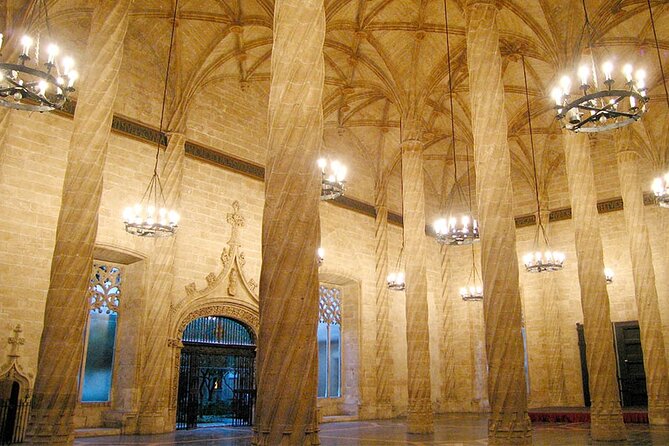
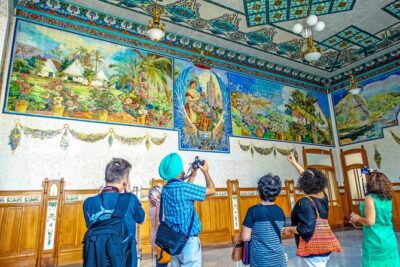
The strongest architectural stop is the Lonja de la Seda, or Silk Exchange. The tour includes entry here, which gives the experience more substance than a walk that only points out façades from the street.
The Silk Exchange reflects Valencia’s historic role in commerce. Its name and design tell you that trade was not a side activity in the old city. It shaped the buildings, the public life, and the city’s connection with the wider Mediterranean world.
Allow the guide’s explanation to do more than identify the building. The useful question is why this particular structure mattered. Sara has been praised for placing details in their historical setting and using photos on a tablet to make the past easier to picture. That approach is especially helpful at a major monument, where a quick glance at stone columns does not tell you much on its own.
The stop also connects directly with Valencia’s UNESCO recognition. The Lonja de la Seda is one of the city’s three cultural properties highlighted by the tour. The other two are the Tribunal de las Aguas, or Water Court, and the Fallas festival.
You should keep expectations sensible. The tour includes a visit to the Silk Exchange, but the total walk is only about two hours. If you want a slow architectural study or extensive time inside, you may want to return independently.
Same city, a completely different afternoon:
- Valencia: Oceanogràfic Entry Ticket
★ 4.7 · 9,893 reviews - Valencia: 24 or 48-Hour Hop-on Hop-off Bus Ticket
★ 3.9 · 5,611 reviews - Valencia: Palosanto Flamenco Show Ticket
★ 4.8 · 3,876 reviews - Valencia: Catamaran Cruise with Sunset Option
★ 4.0 · 3,566 reviews
Queen’s Square and the old city streets
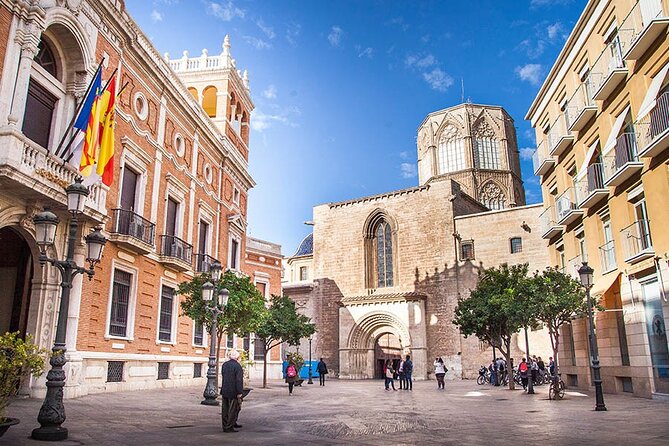
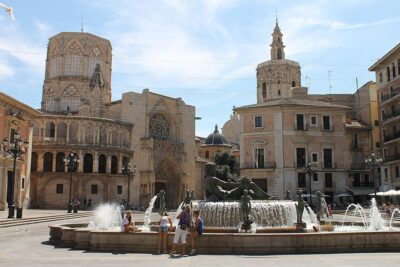
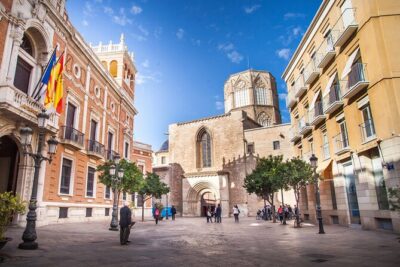
The route continues to the Plaza de la Reina, known in English as Queen’s Square. This is one of the central spaces in Valencia’s old town and a useful point for understanding how the historic streets connect.
Squares are often where a guide’s storytelling becomes most useful. At street level, you may notice a church tower, a narrow lane, or a grand façade without understanding how the pieces fit together. The guide can explain the changes in the city over more than 21 centuries and show how different eras share the same small area.
The route is not limited to one architectural period. Valencia’s historic center includes monuments from several eras, and the tour’s purpose is to explain that evolution as you move from one place to the next. That broad view is more helpful on a first visit than a long lecture about a single building.
For photographers, Queen’s Square is also a practical orientation point. You can note the nearby streets and decide where to return after the tour. Just remember that the walk is guided, so stopping for long photo sessions may affect the group’s pace.
Virgin’s Square and Valencia’s traditions
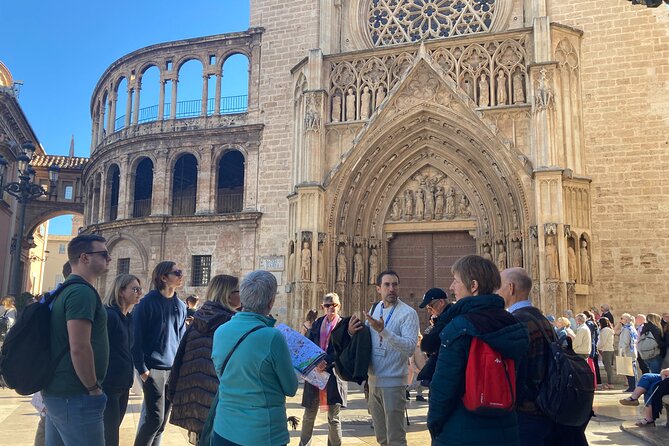
Plaza de la Virgen, or Virgin’s Square, is another major stop. The tour finishes nearby on Carrer del Micalet, making this part of the route especially convenient if you plan to continue around the cathedral area.
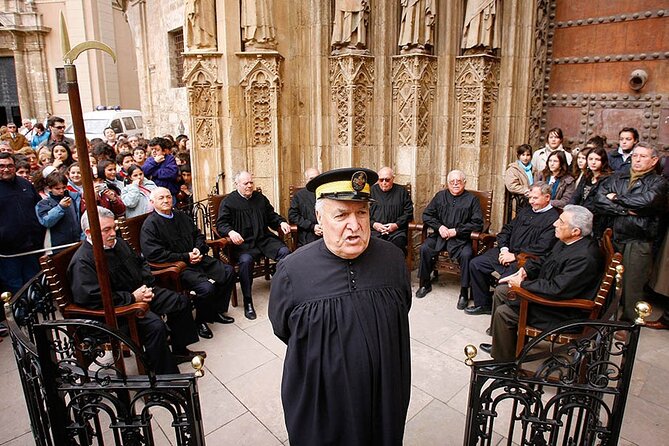
The square also helps explain the Tribunal de las Aguas, Valencia’s historic Water Court. This institution is included among the city’s UNESCO-recognized cultural properties. The tour does not present Valencia as a collection of old stones. It connects the city’s traditions with the way people have managed water, celebrated festivals, and organized public life.
Fallas provides a second living tradition. It is Valencia’s annual festival of ephemeral art, fire, and fireworks. Even if you visit outside the festival season, learning about it gives you a better understanding of the city’s local identity. If you happen to visit while preparations are underway, the subject may feel especially immediate. One guide was able to explain the excitement around Fallas and point a visitor toward a good meal afterward.
The tour’s treatment of these subjects is one of its best features. You get the Silk Exchange as a physical monument, then the Water Court and Fallas as traditions that still help define Valencia. That mix gives the walk more range than a standard old-town architecture circuit.
Guides who make a short route work

The guide is central to the value of this experience. Two hours can feel rushed with a weak guide, but the available guide team has received praise for clear English, strong preparation, friendliness, and useful local suggestions.
Sara appears frequently among the guide names associated with the experience. She has been praised for knowing Valencia’s history, speaking excellent English, keeping the route organized, and adding anecdotes and tablet photographs. She also makes room for questions, which helps turn a fixed route into a conversation.
Gabor is another possible guide. His strengths include orientation, careful attention to the group, and advice about other sights and good times to visit them. María Eugenia has been described as personable and passionate about Valencia’s history and traditions, with a style that makes the city feel connected rather than fragmented.
You cannot necessarily request a particular guide from the information provided, so treat the names as examples of the guiding style you may encounter, not a guarantee. The important point is that the experience depends heavily on the individual guide. A private format gives your group more room to ask questions, but the quality of the time still rests on how well the guide uses those two hours.
Is $121.91 per person good value?
The listed price is $121.91 per person. That is expensive for a two-hour walk if you are comparing it with free city walks or large group tours. The comparison changes because this is a private activity and only your group participates.
For a couple, family, or small group that wants a personal introduction, the cost may be reasonable. You are paying for a professional English-speaking guide, a planned route, entry to the Silk Exchange, and the chance to ask questions without being one voice in a very large crowd.
The value is strongest if you use the tour as a planning tool. Ask about places to eat, what else to see, and how to organize the rest of your time. Guides have provided restaurant recommendations and practical sightseeing advice, which can make the walk useful beyond its formal itinerary.
For one person, the price is harder to justify. Group discounts are available, but the exact reduced price is not provided, so check the booking terms before assuming how much you will save. If your main goal is simply to see the outside of the main monuments, a private two-hour tour may not be the best fit.
Who will get the most from this walk?
I would choose this experience if you are visiting Valencia for the first time and want the old center explained before exploring alone. It suits people who prefer context, questions, and local recommendations over a quick list of photo stops.
It is also a good match for visitors with limited time. The route covers the main historic areas and gives you a compact introduction to Valencia’s civic buildings, market, squares, Gothic heritage, and cultural traditions.
Families can take part, but children must be accompanied by an adult. Most people can participate, and service animals are allowed. Since the route is on foot and includes historic streets and an interior monument, anyone with specific mobility needs should confirm details before booking.
This is less suitable if you want a relaxed café-to-café stroll, a food tasting, or long visits inside each building. The walk covers a lot in two hours. You will need to accept a steady pace and save deeper exploration for later.
Practical details before you book
You receive confirmation at the time of booking, and a mobile ticket is available. The activity begins at Bailén near Estació del Nord and ends at Carrer del Micalet, 7, in Ciutat Vella.
Children need an accompanying adult. Service animals are permitted, and most participants can join. Transportation to and from the meeting and ending points is not included.
The tour requires good weather and a minimum number of participants. If poor weather or insufficient numbers cause cancellation, you will be offered another date or experience, or a full refund. You can cancel for a full refund up to 24 hours before the start time. Changes or cancellations inside that 24-hour window are not accepted and are not refunded.
Should you book Essential Valencia?
Book it if you want a well-organized first look at Valencia’s old center, especially if history, architecture, and local customs matter to you. The Silk Exchange visit, the explanation of the Water Court and Fallas, and the practical advice from guides such as Sara, Gabor, and María Eugenia give the short route real purpose.
Think twice if you are traveling alone on a tight budget or prefer to explore slowly without a set pace. At $121.91 per person, the private format needs to matter to you. For a couple or small group arriving in Valencia for the first time, this can be a useful way to get oriented, ask smart questions, and decide what deserves a closer look.
FAQ
How long does the Essential Valencia tour last?
The tour lasts approximately two hours.
What language is the tour conducted in?
This is the English version of the experience.
Is the tour private?
Yes. Only your group participates in the private activity.
Where does the tour begin?
The meeting point is Bailén near Estació del Nord in the Extramurs district of Valencia.
Where does the tour end?
The tour ends at Carrer del Micalet, 7, in Valencia’s Ciutat Vella.
Is transportation included?
No. Transportation to and from the meeting and ending points is not included.
What sights are included on the route?
The route includes North Station, the Town Hall, the Central Market, the Lonja de la Seda, Queen’s Square, and Virgin’s Square.
Does the tour include entry to the Silk Exchange?
Yes. The experience includes a visit to the Lonja de la Seda, also called the Silk Exchange.
Can I cancel for a refund?
Yes. You can cancel at least 24 hours before the start time for a full refund. Cancellations or changes made less than 24 hours before the start time are not accepted or refunded.
Just added to the Valencia listings
- Visit the most beautiful village in Valencia: Chulilla★ 5.0 · 14 reviews
- Walking Tour through Valencia’s Historic Centre★ 5.0 · 19 reviews
- Windsurf class on Valencia beach★ 4.3 · 4 reviews
- Valencia: Guided Mountaineering Experience★ 3.7 · 4 reviews
- Valencia: World of Illusions Museum Entrance Ticket★ 4.0 · 22 reviews
- Valencia: Gourmet Food & Wine Tour★ 4.2 · 6 reviews
- VALENCIA ESSENZIALE + SITI PATRIMONIO UMANITÀ (ITALIANO)★ 4.7 · 3 reviews
- Valencia: Wine Gogh Glow Academy Paint and Sip Classes★ 4.2 · 18 reviews
Historical Tours, compared.
Valencia Old Town Tour with Wine & Tapas in 11th Century Historic Monument
Read our review →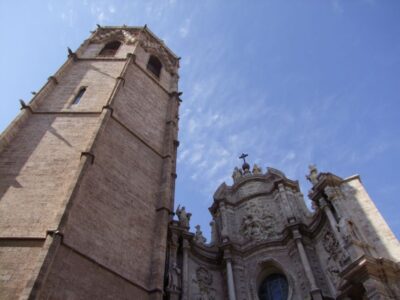
Essentials of Valencia and its World Heritage Sites
Read our review →
Valencia’s Greatest Food, History & Culture Tour
Read our review →

Genuine Valencian tapas tour with a pinch of History
Read our review →Browse the lists this tour appears in