Reviewed · TICKETS
Valencia: Art & Architecture Guided Tour with Monuments Tickets
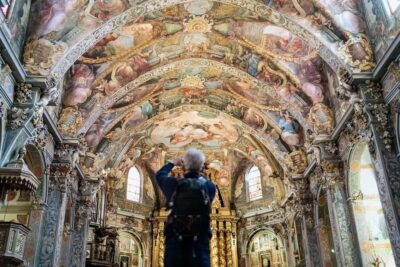
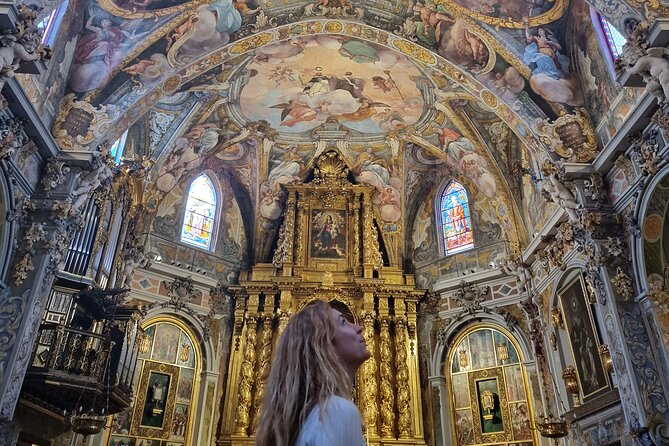
San Nicolás church is the star here. Its Gothic bones are covered by nearly 2,000 square meters of restored Baroque frescoes, creating the effect of a Valencian Sistine Chapel. The tour also gets you inside the cathedral and La Lonja de la Seda, not just outside for a quick photograph.
I like the way this tour combines major sights with street-level history, and I like the small-group format, which can make it easier to ask questions. Guides such as Benito, Monika, Paulino, and Carmen are praised for clear storytelling and useful food tips. The main drawback is pace: three hours is enough for an overview, but not enough for long photo stops or a detailed look at every room.
Key points to know before booking
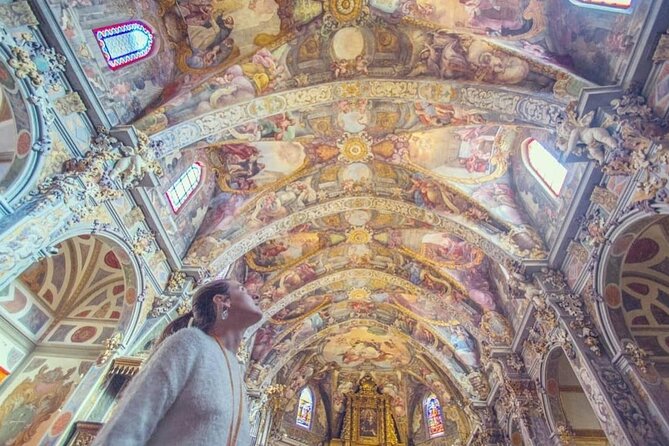
- San Nicolás is the visual highlight: Its frescoed ceiling and light-and-music presentation can be the most memorable part of the walk.
- Three important interiors are included: Your ticket covers San Nicolás, Valencia Cathedral, and La Lonja de la Seda.
- Expect a real walking tour: You may cover 2 to 3 miles through Ciutat Vella, mostly on foot.
- The guide shapes the experience: Benito, Monika, Paulino, Jorge, Uriel, and Carmen are among the guides praised for history, architecture, and local advice.
- The group can be small: The official maximum is 20 people, and some departures have been much smaller.
- Check the meeting point carefully: The booking details name Plaça de la Verge, while the route description begins at Torres dels Serrans. Confirm the exact starting instructions before setting out.
Why San Nicolás makes this tour worth considering
Valencia is full of handsome buildings, but San Nicolás rewards an interior visit in a way that a casual old-town walk cannot. From outside, it looks like a historic Gothic church. Inside, the ceiling opens into a vast painted scene filled with saints, angels, decoration, and color.
The church has been used for worship for more than 700 years. Its structure reflects an earlier Gothic period, while its later decoration is Baroque. That contrast gives the guide something useful to explain: Valencia’s buildings were not created in one clean architectural phase. They were altered, repaired, and restyled as the city changed.
The scale is striking. The painted surface covers nearly 2,000 square meters, described as roughly twice the area of the frescoes in Rome’s Sistine Chapel. That comparison is useful for scale, though the two churches are very different in style and artistic purpose.
A light presentation set to music is also part of the appeal. It may not be the reason to book the tour by itself, but it gives the church an added visual punch. Bring your eyes upward and give yourself a moment to take in the ceiling before focusing on dates and names.
This is also where the guide’s delivery matters most. A good explanation helps you see the Gothic framework beneath the Baroque paint. Without that context, you may simply see a beautiful ceiling and move on.
More museum and attraction tickets in Valencia
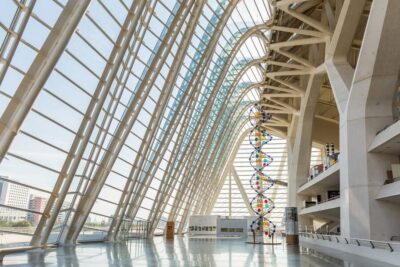
- Valencia: Oceanogràfic Entry Ticket
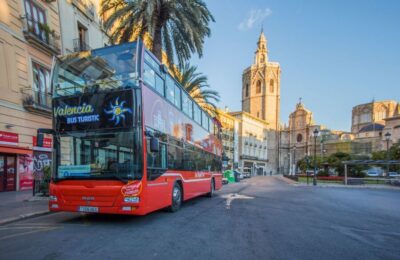
★ 4.7 · 9,893 reviews - Valencia: 24 or 48-Hour Hop-on Hop-off Bus Ticket
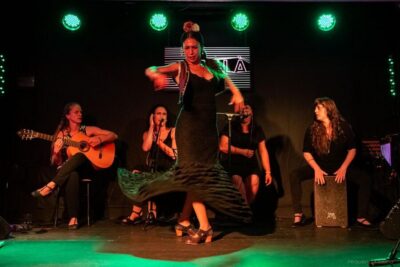
★ 3.9 · 5,611 reviews - Valencia: Palosanto Flamenco Show Ticket
★ 4.8 · 3,876 reviews
Torres dels Serrans and Valencia’s old defenses
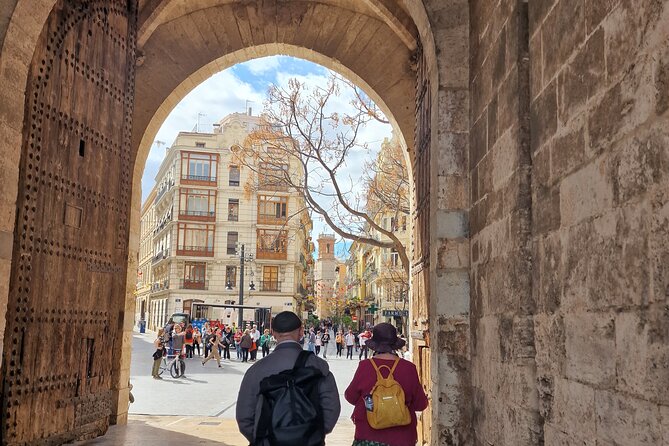
The route begins with Valencia’s medieval defenses at Torres dels Serrans, according to the itinerary. The towers were part of the old main gate through the city wall, and the opening discussion links them with the Turia River and the different walls Valencia had over time.
This is a useful starting point because it places the old city in physical context. You are not just looking at an isolated monument. You are learning where the medieval city began, how people entered it, and how the river shaped Valencia’s development.
The stop itself is scheduled for about 20 minutes, with no admission fee. That makes it a good orientation point rather than a long museum visit. The guide can establish the city’s broad timeline here before the group moves into the narrower streets of Ciutat Vella.
The practical point is that this tour works best when you are ready to walk from one sight to the next. The route is not a series of disconnected ticket entries. The streets between the monuments are part of the lesson.
One detail needs attention before you leave your hotel. The stated meeting point is Plaça de la Verge, while the itinerary describes Torres dels Serrans as the first stop. Since both locations are in the old center but are not the same place, check the final meeting instructions carefully.
Palau de la Generalitat and the palaces of El Carmen
The next section takes you through the Barrio del Carmen and past Palau de la Generalitat. The focus is not simply on one grand building. The guide explains why Valencia has so many palaces and why this part of the city became home to them.
That question gives the walk some depth. Wealth, government, religion, and trade all left their mark on the old center. As you move through the district, you can begin to read the city through its façades and public buildings rather than treating each one as a separate photo stop.
Admission to Palau de la Generalitat is not included, so the tour treats it as an exterior point of interest. That is worth knowing if you hope to enter every building named along the route. The included tickets are for San Nicolás, the cathedral, and La Lonja de la Seda.
This stop is likely to appeal most if you enjoy seeing how a city is organized. It is less about one dramatic interior and more about understanding why the streets contain such a high concentration of important buildings.
La Lonja de la Seda, Valencia’s great trading hall
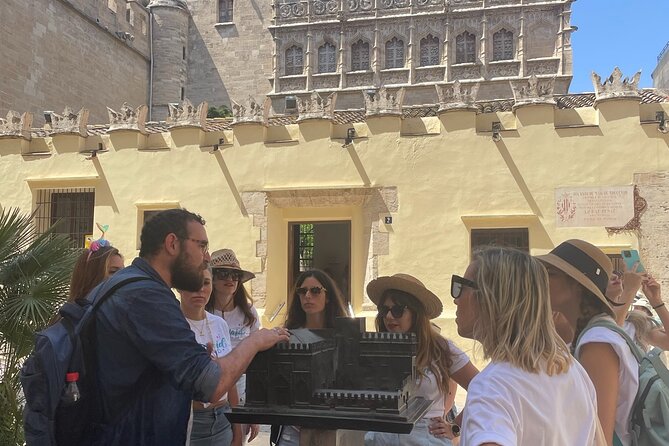
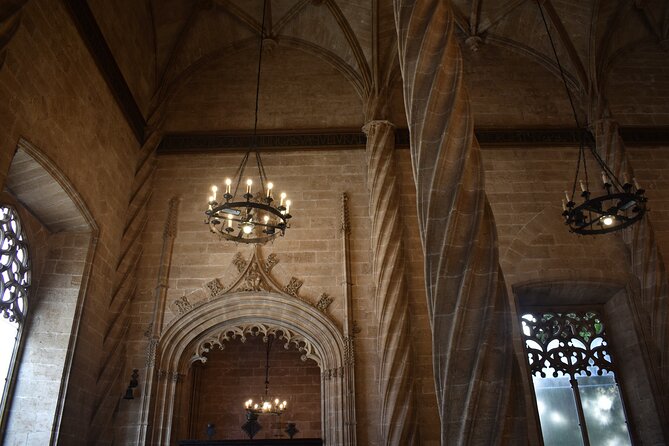
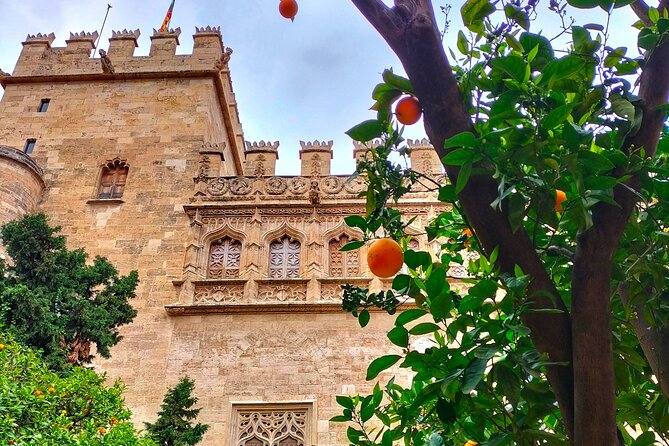
La Lonja de la Seda is one of the tour’s strongest stops. This Gothic complex was built in the 15th century in only about 15 years, a remarkable pace for a major stone building. It was linked to Valencia’s silk trade and to the wider commercial life of Mediterranean cities.
The building is also a useful correction to the common idea that Gothic architecture belongs mainly to churches. La Lonja is a large civil Gothic structure, created for commerce rather than worship. Its inclusion on the UNESCO World Heritage list recognizes that unusual role and its importance to the city’s trading past.
Inside, look for the tall columns, the detailed stonework, and the grand spaces designed to project order and authority. The guide’s explanation helps connect the architecture to the merchants who used it. You are not just admiring decoration. You are seeing how trade shaped the city’s wealth and public identity.
The route description also mentions the elaborate ceiling on the second floor. If that area is open during your visit, it adds another layer to the stop. Access within historic buildings can vary, so treat this as part of the architectural explanation rather than a guaranteed extended visit to every room.
The included admission has real value here. La Lonja is a place you can visit alone, but a guide helps you notice the purpose behind the design. The stop is scheduled for about 30 minutes, which is enough for a clear introduction but may feel short if you want to study every detail.
A few more Valencia tours worth comparing
- Valencia: City Highlights Guided Bike Tour
★ 4.7 · 2,373 reviews - From Valencia: Montanejos Guided Hike with Natural Pools
★ 4.5 · 1,741 reviews - From Valencia: Caves of San José Guided Excursion and Ticket
★ 4.6 · 1,717 reviews - San Jose Caves Guided Tour from Valencia
★ 4.5 · 732 reviews
Valencia Cathedral and the Holy Chalice
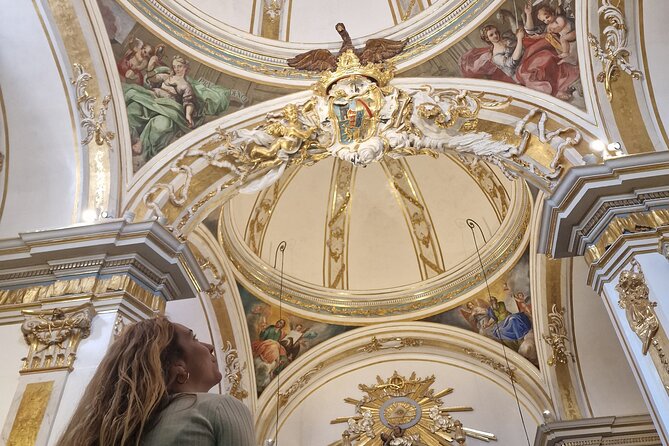
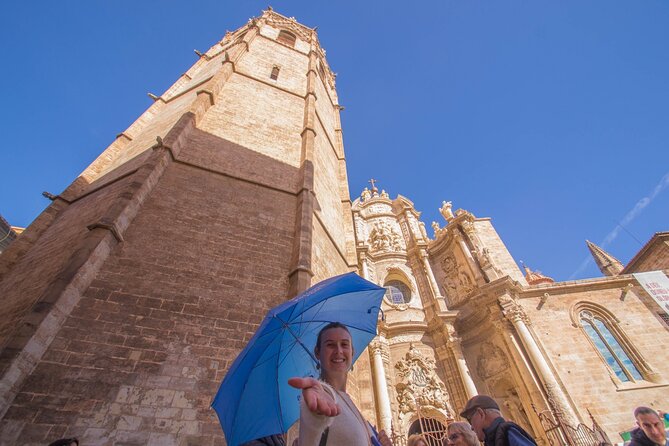
Valencia Cathedral brings together several periods of the city’s religious and artistic past. Construction began in the 13th century on the site of an earlier Roman temple and later mosque. Additions and reforms continued through the centuries, leaving Romanesque, Gothic, and Baroque elements in the same complex.
That mixture is exactly why a guided visit helps. You may see a doorway, chapel, or ceiling and assume it belongs to one period. The guide can point out how the building changed over time and explain why its appearance is not architecturally uniform.
The cathedral’s most famous object is the Holy Chalice, kept here and identified by tradition as the cup used at the Last Supper. The relic has also been used by Popes John Paul II and Benedict XVI during Eucharistic celebrations in Valencia. The guide can give you the historical and religious background without asking you to accept every claim as proven fact.
Another important feature is the Renaissance fresco work on the high altar. These paintings were rediscovered when a later Baroque covering was removed. That kind of layered history is common in old European churches, but it is especially interesting here because the building’s visible decoration records several distinct phases of taste.
The cathedral stop lasts about 30 minutes and includes admission. If religious art matters to you, this may be the most rewarding stop after San Nicolás. If you prefer a slow, quiet church visit, the scheduled time may feel compressed.
Plaça de la Mare de Déu and the final view
The walk finishes at Plaça de la Mare de Déu, where the cathedral and basilica face the same square. It is a strong place to end because several major parts of Valencia’s religious center come together in one view.
The final 20 minutes are used to pull together the cultural themes of the walk. You get a last look at the relationship between the cathedral, basilica, and surrounding old quarter rather than ending abruptly after the final ticketed entry.
The tour ends back at Plaça de la Verge, according to the meeting details. That makes the route convenient for continuing on foot into the center, finding a café, or using public transport nearby. There is no hotel pickup, so plan to reach the old town on your own.
How much walking and how fast is the pace?
The tour lasts about three hours and covers roughly 2 to 3 miles, based on the practical details provided by participants. The walking is not described as strenuous, but you should still wear comfortable shoes. Valencia’s old center is best handled on foot, and the route includes several stops rather than one single building.
The pace seems designed to give you a useful overview without turning the morning or afternoon into a marathon. Guides have been praised for keeping groups in the shade when possible and for stopping to help people find water during hot weather.
Still, you should not expect unlimited time for photographs. One common limitation is that the group keeps moving, and the schedule leaves little room to pause at every doorway or take multiple shots at each monument.
If you want photographs, take them during the guide’s natural pauses and save longer picture sessions for a return visit. This tour is about understanding the old center efficiently, not producing a complete photo record.
What the guides add to the experience
The guide is the difference between a pleasant walk and a useful one. Benito is praised for clear explanations and an easy manner. Monika is noted for pointing out small details, recommending food and drinks, and adapting well to a tiny group. Paulino is remembered for stories about the Holy Grail, San Nicolás, and the Roman period.
Other named guides include Uriel, Jorge, Carmen, Carlos, Joaquín, and Anais. The strongest pattern is not a single scripted personality. It is the value of having someone explain what you are looking at and answer side questions as you walk.
English ability can vary by guide. Most of the feedback is very positive about clarity, but one account noted that the guide sometimes struggled with English. If you need highly polished English for complex architectural terms, that is a fair consideration.
Group size can also change the feel of the tour. The official maximum is 20 people, but some departures have had only a handful of participants, and one became a private-style experience after other guests canceled. A small group makes it easier to ask questions and hear the guide in narrow streets.
There was also one serious complaint about group management and a missed section near a cathedral. The provider attributed it to a misunderstanding about instructions. To protect yourself, stay close to the guide, listen carefully when the group moves, and confirm the next meeting point before entering a large church or square.
Is the $66.54 price good value?
At $66.54 per person, the tour is not the cheapest way to walk around Valencia. You are paying for the guide as much as for the admissions. The price includes entry to San Nicolás, the cathedral, and La Lonja de la Seda, which are the key paid interiors on the route.
The value is strongest if you have only a short time in the city or want a clear introduction on your first day. You can see several major monuments, avoid arranging separate tickets, and get the story that connects them.
It is less compelling if you prefer to enter sites independently and spend as long as you wish inside. You may want more time for photographs, side chapels, or the cathedral’s smaller details than the three-hour schedule allows.
The small group and line-skipping convenience also matter. Several guides arrange admission in advance, helping you spend your limited time seeing Valencia rather than waiting at ticket counters. Just remember that a reserved entry does not mean every part of a monument will be open or that you can linger without limit.
Who should book this Valencia walking tour?
I would choose this tour for a first visit, a half-day in Valencia, or a traveler who wants the old center explained in a logical order. It suits people who enjoy art, churches, trade history, and architecture but do not want to research each monument before arriving.
It is also a good fit if you are arriving without a clear sense of the city. The route gives you useful bearings for later exploring, and guides often add suggestions for food and drinks.
Families can join, but children must be accompanied by an adult. Most people can participate, though the distance and standing time mean you should consider your own comfort.
I would choose another format if you want a slow architectural study, long photography stops, or a private schedule. This is a lively overview with several strong interiors, not a specialist seminar.
Should you book it?
Book it if San Nicolás, the cathedral, and La Lonja de la Seda are high on your list and you want their stories in one compact walk. The included tickets, local guides, and old-town route make the $66.54 cost reasonable for a first look at Valencia.
Before booking, confirm the meeting point, prepare for 2 to 3 miles of walking, and accept that the schedule favors coverage over lingering. If those limits suit you, this is a smart way to get your bearings and see the city’s finest historic interiors in a single afternoon.
Free cancellation is available up to 24 hours before the start time. The tour requires good weather and a minimum number of participants, so a weather or minimum-group cancellation may result in another date or a full refund.
FAQ
How long does the Valencia art and architecture tour last?
The tour lasts approximately three hours.
What sites are included with admission?
Admission is included for San Nicolás Church, Valencia Cathedral, and La Lonja de la Seda.
Is the Holy Chalice included in the cathedral visit?
Yes. The cathedral visit includes the opportunity to learn about the Holy Chalice, which is kept in Valencia Cathedral.
How much walking should I expect?
The tour involves roughly 2 to 3 miles of walking through Valencia’s old center.
Is the tour offered in English?
Yes. The experience is offered in English with a professional art historian guide.
How large is the group?
The maximum group size is 20 participants. Some departures may be much smaller.
Where does the tour start and finish?
The meeting and end details identify Plaça de la Verge in Ciutat Vella. The route description names Torres dels Serrans as the first stop, so confirm the exact meeting instructions before the tour.
Just added to the Valencia listings
- Visit the most beautiful village in Valencia: Chulilla★ 5.0 · 14 reviews
- Walking Tour through Valencia’s Historic Centre★ 5.0 · 19 reviews
- Windsurf class on Valencia beach★ 4.3 · 4 reviews
- Valencia: Guided Mountaineering Experience★ 3.7 · 4 reviews
- Valencia: World of Illusions Museum Entrance Ticket★ 4.0 · 22 reviews
- Valencia: Gourmet Food & Wine Tour★ 4.2 · 6 reviews
- VALENCIA ESSENZIALE + SITI PATRIMONIO UMANITÀ (ITALIANO)★ 4.7 · 3 reviews
- Valencia: Wine Gogh Glow Academy Paint and Sip Classes★ 4.2 · 18 reviews
Tickets, compared.



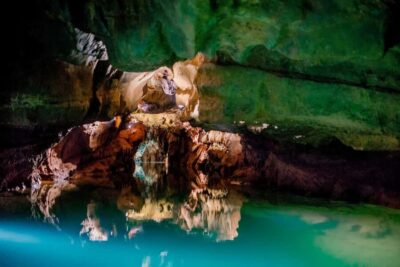
Caves of San José Guided Excursion and Ticket
Read our review →