
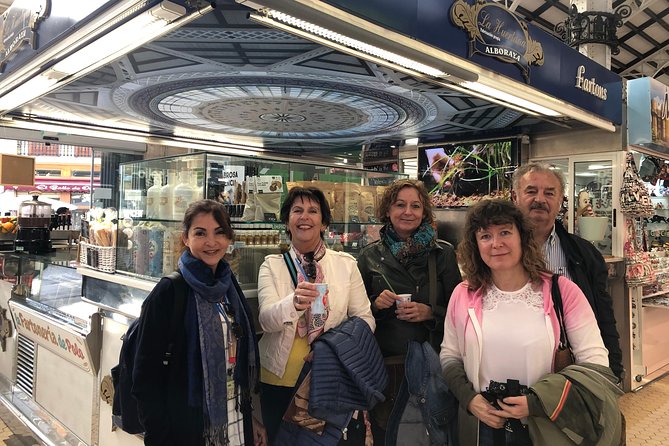
Reviewed · VALENCIA
Valencia Step By Step for you
Valencia Step By Step packs a surprising amount into two and a half hours. You move from the City Hall balcony to the Central Market, La Lonja, the old Turia riverbed, Roman ruins, churches, and a grand palace, with guide Marcela supplying the stories that connect them.
I like the private format, since your group can ask questions and set the pace within reason. I also like the mix of everyday Valencia and major sights: a market drink and local costumes feel just as useful as the famous medieval buildings. The main drawback is the brisk schedule. Ten stops leave little time for lingering, and several admission fees are not included.
Key points to know before booking
- A private English-language walk with Marcela gives you room for questions, photos, and extra explanation.
- The Central Market stop includes a typical Valencia drink, adding a small but welcome local taste to the route.
- La Lonja de la Seda is included, while entry to the Cathedral, Almoina Archaeological Center, and Dos Aguas Palace costs extra.
- The tour connects many eras in one compact route, from the first Roman settlement to modern city life.
- The City Hall balcony offers an early city view and a useful introduction before the walking begins.
- The route returns to the starting point, making it easy to continue sightseeing afterward.
Why this walk works for a first look at Valencia
Valencia can feel spread across several identities. It is a Roman city, a medieval trading center, a Catholic pilgrimage site, a market town, and a modern Spanish city with broad public spaces. This walk gives you a quick framework for all of them.
The route begins in Plaça de l’Ajuntament, the central square, then heads into the old center. You get a look at civic Valencia, local food culture, medieval commerce, religious buildings, ancient archaeology, and 19th-century wealth. That range is the tour’s greatest strength.
Marcela is the guide named for this experience. The walk is offered in English, and she also speaks German, according to the details available about the tour. Her style is story-led rather than simply a list of dates. You can expect anecdotes, explanations of architecture, and time for questions. That matters here because the route moves quickly and the buildings can otherwise blur together.
The tour is private, so only your group participates. That is a better arrangement than a large city walk if you want to ask why a building looks a certain way, pause for a photograph, or request a little more explanation at a particular stop. It does not mean the tour is leisurely. The advertised time remains about 150 minutes, and ten stops require steady movement.
Other Valencia outings people book on the same trip:
- Valencia: Oceanogràfic Entry Ticket
★ 4.7 · 9,893 reviews - Valencia: 24 or 48-Hour Hop-on Hop-off Bus Ticket
★ 3.9 · 5,611 reviews - Valencia: Palosanto Flamenco Show Ticket
★ 4.8 · 3,876 reviews
City Hall balcony and Valencia’s civic center
The first stop is Valencia City Hall, where Marcela takes you inside the building and up to the balcony overlooking the square. This is a useful beginning because it gives you a view of the city center before you start examining individual monuments.
The balcony also puts Valencia’s public life into focus. From here, you can see the town hall square and get an introduction to the city. It is a short stop, listed at about 15 minutes, so think of it as an orientation rather than a full tour of the building.
Starting here has a practical benefit. You learn where the walk begins and ends, and you get a broad sense of the old center before entering its narrower streets. You also avoid beginning with a dense architectural lecture. The first view gives the rest of the route a point of reference.
Central Market for architecture and a local drink
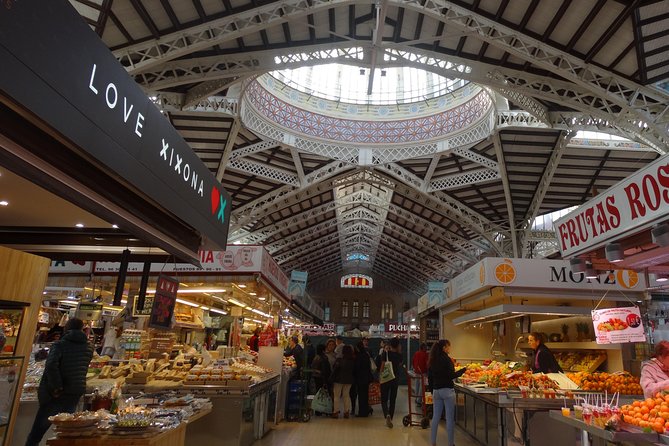
The Mercat Central de València is one of the most useful stops on the walk. You see its modernist structure, look at typical regional products, and taste a traditional Valencia drink included with the visit.
The market adds daily life to a route otherwise filled with monuments. Food tells you something about Valencia that a church or palace cannot. Even a short visit lets you connect the city’s architecture with the produce, products, and eating habits of the region.
The scheduled time is about 15 minutes. That is enough for a quick look and the included tasting, but not enough for a full market visit. If you want to shop, study every stall, or eat a full meal, plan to return on your own.
I especially like the drink being included because it gives the stop a clear purpose. You are not just passing through a handsome market hall. You get a small, direct taste of Valencia. The exact drink is not specified, so do not book this expecting a particular beverage.
La Lonja and Valencia’s medieval trading power
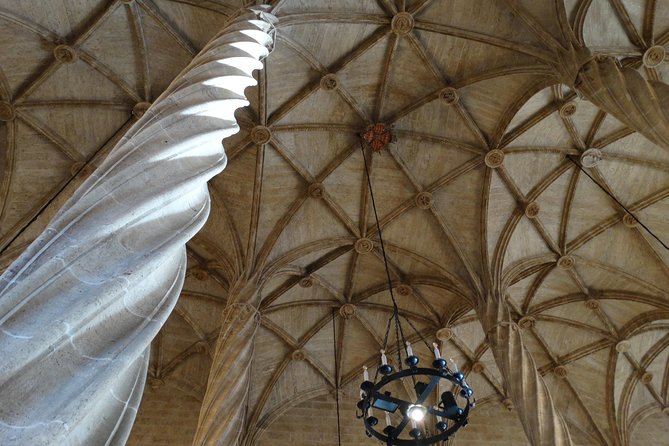
At La Lonja de la Seda, the walk shifts into the Middle Ages. This UNESCO World Heritage building was tied to commerce, and the guide explains the different uses given to the Gothic structure.
This is one of the tour’s strongest stops because the building links architecture with money and trade. You are not looking at a church or royal residence. You are seeing a place shaped by merchants and the economic life of the city.
Admission is included here, which improves the value of the tour. The stop lasts about 25 minutes, making it the longest scheduled visit. That extra time is welcome, since La Lonja needs more than a quick glance from the street.
The guide’s role is important at this point. Gothic buildings can look impressive without being easy to understand. Marcela’s explanations and anecdotes help give the rooms a human purpose. You should still expect an overview rather than a scholarly study. The tour has many more stops ahead.
Same city, a completely different afternoon:
- Valencia: Catamaran Cruise with Sunset Option
★ 4.0 · 3,566 reviews - Valencia Old Town Tour with Wine & Tapas in 11th Century Historic Monument
★ 5.0 · 3,234 reviews - Valencia: Oceanogràfic, Hemisfèric & Science Museum Combo
★ 4.4 · 2,959 reviews - Valencia: City Highlights Guided Bike Tour
★ 4.7 · 2,373 reviews
Serrans Towers and the old river that is no longer there
The Torres de Serrans provide one of the clearest moments of urban history on the route. You enter through what was once the city’s main gate and look toward the old bed of the Turia River.
The river no longer runs through the center in the way it once did, but people in Valencia still call the former channel El Rio. That detail is a good example of how old geography remains part of everyday speech. The empty riverbed is not simply an attractive public space. It helps explain the shape and identity of the modern city.
The stop lasts about 15 minutes and has no listed admission charge. You should expect a view and an explanation rather than a climb or extended visit inside the towers. The main value is the connection between the gate, the former river, and Valencia’s changing city plan.
This is also a good place to listen for the practical details Marcela adds. One of the strongest features of her guiding style is her willingness to answer questions, including questions outside the basic script. That helps when you want to understand why the city still refers to the old river.
The Cathedral and 500 years of sacred architecture
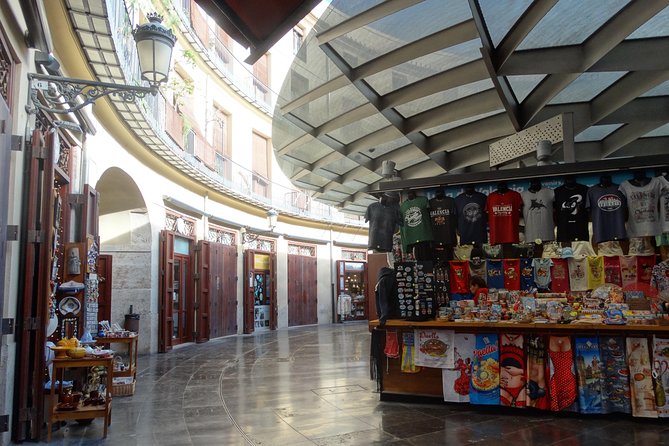
The Valencia Cathedral brings together about 500 years of architecture and several layers of religious use. The cathedral is also associated with the chapel of the Holy Grail, giving this stop importance beyond its exterior design.
The description is broad, and that is appropriate for a short city walk. You are introduced to the cathedral as a sacred place used by different civilizations and periods. You should not expect enough time to study every chapel or architectural detail.
Admission is not included, so budget for a separate ticket if you want to enter. This is one of the main costs to consider when judging the total value of the experience. The guide can explain the building from the outside, but access to the interior depends on your own admission.
For many people, this will be a highlight. For others, the extra cost may make the stop feel more like an introduction than a complete visit. If the Holy Grail chapel is a main reason for choosing the tour, check the current entry arrangements when booking.
The Basilica and the city’s patron saint
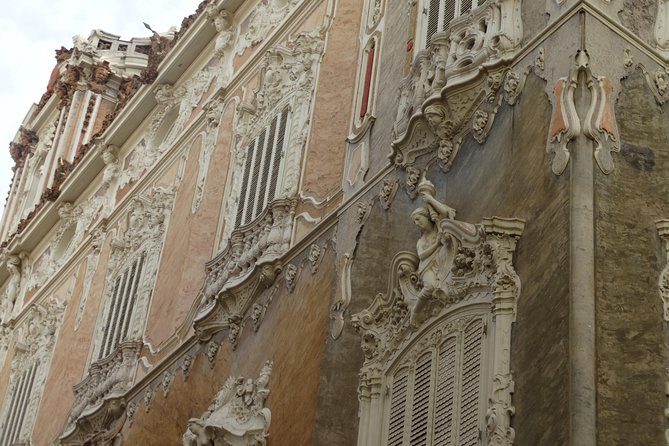
The nearby Basilica de la Virgen de los Desamparados offers a short but focused look at Valencia’s religious identity. Inside, you see paintings decorating the ceiling and the statue of the city’s patron saint.
The visit is scheduled for about ten minutes and has no listed admission charge. This is a compact stop, but it gives the route a more personal and local feel. A patron saint is not just an art subject. The statue connects the building to the city’s civic and devotional life.
The short timing means you will need to keep moving. Still, the basilica works well after the cathedral because you can compare two important religious spaces without spending the whole tour inside churches.
Roman Valencia at the Almoina Archaeological Center
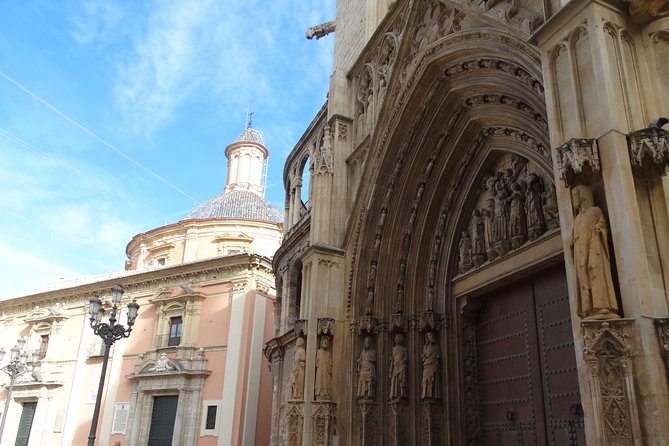
At the Almoina Archaeological Center, you see the ruins of the first Roman city established here. This is the oldest layer on the route, and it changes the scale of the visit.
The Roman remains remind you that Valencia was not created in the medieval period. The market, gates, churches, and palaces all sit above a much older settlement. Archaeological ruins can be difficult to read without help, so Marcela’s explanation is especially useful here.
Admission is not included. The stop is listed at about ten minutes, which makes this another introductory visit rather than a full archaeological tour. If ancient remains are your main interest, you may want to return later with more time. For a general city walk, the brief stop provides an important foundation.
Santa Catalina and a striking Baroque tower
The Church of Santa Catalina is recognized by its Baroque tower, which opens onto one of Valencia’s most attractive streets. The stop lasts around 15 minutes and has no listed admission fee.
This is a good example of the tour’s visual variety. You move from Roman stonework to medieval Gothic architecture, then to a later Baroque landmark. The route does not treat Valencia as one single period. It shows how the city changed over time.
The church also gives you a useful street-level view. A tower is easier to appreciate when you see how it frames the surrounding street and public space. Again, the schedule favors explanation and orientation over a long interior visit.
Dos Aguas Palace and 19th-century wealth
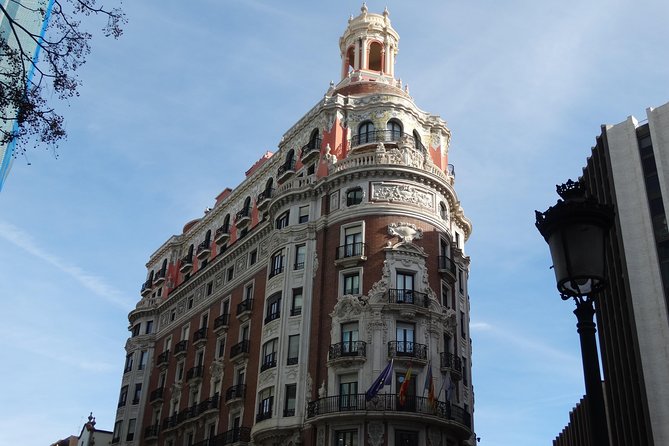
The Palacio del Marqués de Dos Aguas closes the architectural portion of the route with a change in mood. It is described as the only palace of its style in Valencia and represents the city’s 19th-century bourgeoisie.
After Roman ruins, medieval commerce, and religious buildings, the palace shows how a wealthy later class wanted to present itself. Its role in the tour is not only to display decoration. It adds a social layer, showing who had money and how that money appeared in the city.
Admission is not included, and the visit is scheduled for about 15 minutes. If you enter, allow for the extra ticket cost. If you simply view the exterior and hear the explanation, you still get a useful final contrast with the older monuments.
The palace is a smart choice for this route because it prevents the tour from ending in a single historic period. Valencia’s story continues into the 19th century, and this building makes that clear.
Returning through local shops and regional dress
The walk returns to Valencia City Hall, passing shops where you can see typical regional costumes. This final stretch is practical and easy to overlook, but it brings the route back to present-day local culture.
Costumes can help explain how regional identity is displayed and preserved. You may also get ideas for where to browse after the tour, though the available information does not promise shopping time or purchases.
Ending where you started makes the experience easy to fit into a day of sightseeing. You are not left at an unfamiliar location. From the square, you can continue on foot or use nearby public transport.
What the $180.24 price means
The listed price is $180.24 per person, with group discounts available. That is a significant cost for a 2.5-hour walk, so the value depends heavily on your group size and how much you want a private guide.
The price makes more sense if you value Marcela’s personal explanations, want an English-language walk tailored to your questions, and plan to use the tour as your first orientation to Valencia. The private format is the key benefit. You are paying for focused attention, not simply for access to a set of streets.
The value is less clear if you mainly want entry to monuments. The Cathedral, Almoina Archaeological Center, and Dos Aguas Palace are not included, so you will pay extra for those places. La Lonja is included, and the market drink is included, but this is still primarily a guided walking experience.
Before booking, compare the price with your group size. A private tour can be easier to justify for several people sharing the experience than for one person alone. Group discounts may also change the calculation, though the exact discount is not specified.
Pace, practical details, and who will enjoy it
The meeting point is Plaça de l’Ajuntament, 1, in Valencia’s Ciutat Vella. The activity ends back at the same point. It is offered in English, confirmation is provided at booking, and service animals are allowed.
The walk is near public transportation, and most people can participate. The tour requires good weather and a minimum number of participants. If poor weather or low enrollment causes cancellation, you are offered another date or experience, or a full refund.
You should wear comfortable shoes and expect a brisk city walk. That advice follows from the schedule rather than from a special equipment requirement. Ten stops in 150 minutes leaves little room for long breaks.
I would recommend this experience to:
- First-time visitors who want a fast orientation to central Valencia
- Small groups who prefer a private guide
- People interested in architecture across several periods
- Visitors who enjoy asking questions and hearing anecdotes
- Anyone who wants a market stop included in a monument-focused walk
I would be more cautious about booking it if you want long interior visits, extended time at the market, or a slow photography walk. The route covers a lot, but it does not linger.
Should you book Valencia Step By Step?
Book this tour if you want one lively introduction to Valencia’s old center and value a private English-speaking guide. Marcela’s warm, patient style, strong answers to questions, and ability to explain architecture without making the walk dull are major reasons to choose it.
Go in knowing what the tour is and what it is not. It is a fast overview with several important entrances and viewpoints, not a full museum day. Budget separately for the Cathedral, Almoina Archaeological Center, and Dos Aguas Palace, and use the tour to decide which places deserve a longer return visit.
For a first morning or afternoon in Valencia, the route gives you a useful map in your head, a taste from the Central Market, a view from City Hall, and a clear sense of how Roman, medieval, religious, and modern Valencia fit together. That is a fair reason to pay for the private format, especially with a group discount.
FAQ
How long is Valencia Step By Step?
The experience lasts approximately 2 hours and 30 minutes.
Where does the tour start?
It starts at Plaça de l’Ajuntament, 1, in Ciutat Vella, Valencia.
Where does the tour end?
The activity ends back at the meeting point at Valencia City Hall.
Is the tour offered in English?
Yes. The tour is offered in English.
Is this a private tour?
Yes. Only your group participates in the activity.
Are entrance fees included?
Admission to La Lonja de la Seda and the Central Market visit is included. The Cathedral, Almoina Archaeological Center, and Palacio del Marqués de Dos Aguas do not include admission. The City Hall, Torres de Serrans, Basilica de la Virgen de los Desamparados, Santa Catalina Church, and return stop are listed without an admission charge.
Just added to the Valencia listings
- Visit the most beautiful village in Valencia: Chulilla★ 5.0 · 14 reviews
- Walking Tour through Valencia’s Historic Centre★ 5.0 · 19 reviews
- Windsurf class on Valencia beach★ 4.3 · 4 reviews
- Valencia: Guided Mountaineering Experience★ 3.7 · 4 reviews
- Valencia: World of Illusions Museum Entrance Ticket★ 4.0 · 22 reviews
- Valencia: Gourmet Food & Wine Tour★ 4.2 · 6 reviews
- VALENCIA ESSENZIALE + SITI PATRIMONIO UMANITÀ (ITALIANO)★ 4.7 · 3 reviews
- Valencia: Wine Gogh Glow Academy Paint and Sip Classes★ 4.2 · 18 reviews