

Reviewed · HISTORICAL TOURS
Games and History Walking Tour in the Center of Valencia
Valencia’s old center becomes a giant game board on this three-hour walk. You’ll follow a route from the Plaza de Toros to the Serrano Towers, solving challenges while learning how bullfighting, markets, religion, trade, Roman Valencia, and the Turia River shaped the city. Guide Alba brings a playful structure to what could otherwise be a standard history walk.
I like the way the route mixes major sights with small clues, from the messages on Estació del Nord to the symbols on La Lonja’s façade. I also like the flexible pace: the Almoina Archaeological Center can be a quick look or a longer stop, depending on your group. The main consideration is that several interiors are not included, and the walk covers many stops in only three hours.
Key points to know before you book
- Fourteen stops connect Valencia’s main historic sights, beginning near the bullring and ending at the Serrano Towers.
- Games and small rewards shape the tour, with badges collected along the way and a final surprise at the end.
- The route is conducted in English and accepts mobile tickets.
- Optional admissions cost extra, including La Lonja, the Micalet bell tower, and Valencia Cathedral.
- The group can include up to 20 people, so this is social and interactive rather than a private walk.
- The finish is beside the Turia River, with a group photo facing the Serrano Towers.
Why this Valencia walk feels different
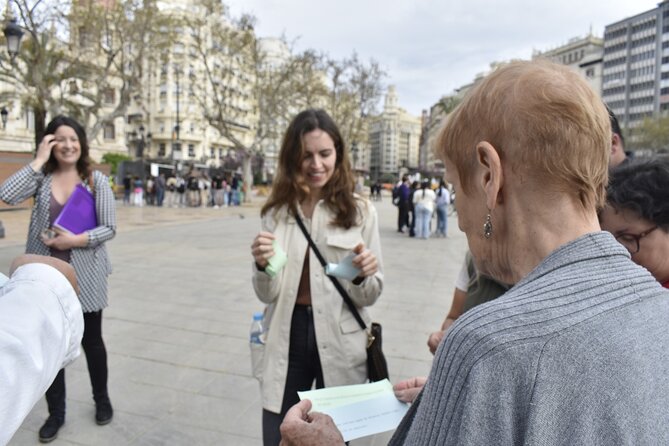
Many city walks ask you to listen, look, and keep moving. This one asks you to participate. You’ll answer questions, earn small rewards, and work through challenges with the rest of the group. That format gives children, families, and anyone who loses interest during long lectures a reason to stay involved.
The route also gives you a useful first look at central Valencia. It links the Eixample area, the main square, the Central Market, the old merchant quarter, the cathedral area, and the former city walls. You do not simply see isolated monuments. You get a sense of how the city changes from grand nineteenth-century avenues to medieval streets and Roman foundations.
The tone is playful, but the content reaches into serious parts of Valencia’s past. At the Church of Santos Juanes, old customs help explain social life in earlier centuries. At the Plaza de la Virgen, you learn about an ancient institution listed as a UNESCO World Heritage Site, the city’s connection with the Fallas festival, and the meaning behind the fountain.
A perfect record of recommendations and a five-star rating suggest that the format is working well. Still, you should know what you are booking: this is not a quiet, private architecture tour. You will interact with the group, and the games are a central part of the experience.
More history walks in Valencia
- Valencia Old Town Tour with Wine & Tapas in 11th Century Historic Monument
★ 5.0 · 3,234 reviews - Valencia: Historical Walking Tour
★ 4.6 · 390 reviews - Essentials of Valencia and its World Heritage Sites
★ 4.5 · 350 reviews
From the bullring to Estació del Nord
The walk begins at Passatge Doctor Serra and Carrer de Xàtiva, close to the Plaza de Toros. Valencia’s bullring is officially known as the Plaza de Toros de Valencia. The opening discussion looks at the building, its design, the place of bullfighting in Valencia, and the possible messages suggested by its form.
The bullring cannot normally be entered as part of this activity unless a specific event allows access. You’ll receive the explanations outside, so do not count on an interior visit. The stop lasts about ten minutes, which is enough for an introduction but not a full architectural study.
From there, the route moves to Estació del Nord, one of the most characterful buildings in this part of Valencia. The focus is not only on taking a photograph of the façade. You’ll look for the stories and messages built into its decoration, then face the first challenge inside the station.
That interior stop matters. It gives you a chance to see how Valencia presents local identity through architecture, rather than treating the railway station as a simple transport building. Allow about fifteen minutes here. The station is also near public transportation, making the starting area practical if you are arriving from elsewhere in the city.
Plaza del Ayuntamiento and the Correos building
The Plaza del Ayuntamiento gives the group room to spread out and work together. Valencia’s main square changes with events and temporary arrangements, and the activity uses that setting to discuss City Hall, the surrounding neighborhood, and the city itself.
This is one of the more social parts of the walk. You’ll take part in a group challenge and collect badges based on how you do. If you prefer a guide who talks while you quietly take notes, this section may feel more active than expected. If you enjoy questions and quick tasks, it helps break up the history.
The nearby Edificio de Correos y Telégrafos receives a shorter stop of about five minutes. The guide explains the attractive building from outside, without including an interior visit. It is a brief pause, but it adds another layer to the Plaza del Ayuntamiento area and keeps the route moving.
Central Market and La Lonja’s merchant story
The Central Market is one of the best places on the route to connect architecture with daily life. You’ll go inside, look at the structure, and face a time trial that takes you among the stalls and products. The activity is designed to help you notice what Valencia’s market offers instead of simply walking through it on the way to the next monument.
The time trial also makes the market useful for your own trip. You can become familiar with the layout and the range of goods while learning about its past. The stop is planned for about fifteen minutes, so treat it as an introduction rather than time to shop at an unhurried pace.
Next comes La Lonja de la Seda, Valencia’s famous Silk Exchange and one of the great reminders of the city’s commercial power. Outside, you’ll examine the façade and look for the sins and vices represented in its details. This is a fine example of the tour’s method: a building becomes a puzzle, and the puzzle sends you back to the values and behavior of the society that built it.
The standard activity explains the exterior. If your group wants to go inside, the guide can stop there, but admission costs an additional 2 euros at the door. Entry is free on Sundays and holidays. That small fee makes the optional visit reasonable, though you’ll need enough time in the three-hour schedule.
More walking tours in Valencia
- Valencia: Essentials and World Heritages Sites Walking Tour
★ 4.7 · 684 reviews - Valencia: City Walking Tour with Top Attractions – ITALIAN
★ 4.9 · 242 reviews - Valencia Private Walking Tour with Official Valencian Guide
★ 5.0 · 176 reviews - The 10 Tastings of Valencia With Locals: Private Food Walking Tour
★ 4.5 · 119 reviews
Old customs at Santos Juanes and the Plaza Redonda
At the Church of Santos Juanes, a phrase about a little bird becomes a clue to older customs. The stop does not avoid unpleasant parts of the past. Instead, it uses them to help you picture how people lived, behaved, and understood public life in earlier Valencia.
The explanation takes about ten minutes. Because the route uses stories and a small mystery rather than only dates, this stop should work well for anyone who wants historical context without a long lecture.
The Plaza Redonda follows. This circular square has changed over time, and the guide explains those changes while you look at its shape and setting. It is a short stop, about ten minutes, but it gives the route a quieter change of pace before the larger cathedral area.
Plaza de la Reina and Valencia Cathedral
At Plaza de la Reina, you’ll consider which queen gave the square its name and how the area has changed over the centuries. The benches offer a chance to rest for a few minutes, which is welcome after several stops through the center.
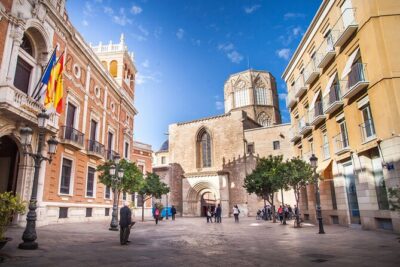
From here, you have views toward Valencia Cathedral and its bell tower, El Micalet. The cathedral stop focuses on three different pieces of the building: the Baroque main façade, the bell tower, and the Gothic side door. Each part carries a different period and purpose, so the explanation helps you see the cathedral as a layered building rather than one single style.
The standard tour stays outside. If the group wants to visit the cathedral, admission is 5.50 euros at the door. Climbing the Micalet costs another 2 euros. These fees are not included in the tour price, and the schedule may not allow a leisurely interior visit, so decide in advance which extra matters most to you.
I would choose the bell tower if you value a climb and city views, while the cathedral entry makes more sense if you want to examine the building’s interior. The tour itself does not require either option.
Plaza de la Virgen and the Roman remains at Almoina
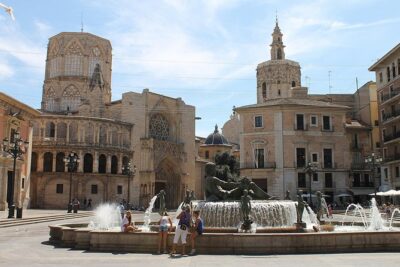
Plaza de la Virgen brings together religion, public space, local tradition, and another challenge. You’ll learn about an ancient institution recognized as a UNESCO World Heritage Site, the relationship between the Virgin and Valencia’s Fallas celebrations, and the story told by the fountain.
This is a strong place to pause because several parts of Valencia’s identity meet in one square. The explanation lasts around fifteen minutes, and the group challenge keeps the stop from becoming a purely visual visit.
The Almoina Archaeological Center provides a different kind of history. Here, you see the remains of Roman Valencia and learn about the city’s foundation and its earliest inhabitants. The length of this stop is flexible. It can last about ten minutes, or the group can pass through quickly if time is tight.
That flexibility is useful, especially for families or groups with different interests. If Roman remains are important to you, speak up early so the stop does not become a one-minute glance. If you have already spent extra time at the market or cathedral, this is one place where the guide can adjust the pace.
Serrano Towers and the Turia River finish
The route ends at the Serrano Towers, once part of Valencia’s walls. The discussion looks at how the towers’ function changed over time. You’ll also total the badges earned through the games and challenges.
The final surprise is deliberately kept secret, and completing it may require you to set aside some shyness. That detail tells you a lot about the mood of the tour. You should be ready for a small public task, not just a final thank-you and goodbye.
The walk finishes across from the towers, in the park beside the Turia River. The group can take a photograph with one of Valencia’s most recognizable views while learning why the river matters to the city. The ending is practical too. You finish in an open area rather than being left inside a narrow old street, with access to the surrounding park and central neighborhoods.
Price, pace, and what you actually receive
At $48.06 per person, the tour is not the cheapest way to see Valencia’s center. Its value depends on how much you want from a guide. You are paying for about three hours of organized interpretation, a route linking fourteen places, and an interactive format with small rewards and a final surprise.
The price also covers more than a basic walk from one monument to another. You receive explanations at the bullring, station, market, churches, cathedral area, Roman remains, and city walls, plus activities that make you look more closely. Still, most admissions are separate, so budget extra if you want to enter La Lonja, the cathedral, or the Micalet.
The route is usually booked about 21 days ahead, which is a useful planning signal. If you want a particular date, booking early is sensible. Confirmation arrives at booking, and free cancellation is available up to 24 hours before the start time. Poor weather or failure to reach the minimum number of participants can lead to a new date or a full refund.
The group limit is 20 people. That is small enough for an interactive activity, though it is not the same as having a private guide. The tour is offered in English, uses a mobile ticket, allows service animals, and is near public transportation. Most people can participate, but you should expect three hours of walking and standing through busy central streets.
Who should choose this tour
I would recommend this walk to families, first-time visitors, and adults who enjoy learning through questions rather than a long stream of facts. It also suits anyone who wants a broad introduction to Valencia before exploring favorite sites in greater detail.
The format is especially helpful if you are traveling with children. The badges, time trial, and final challenge give them something concrete to do, while the adults receive a useful introduction to the city’s major landmarks.
You may prefer another tour if you want a private experience, a slow architectural study, or included entrance tickets. This route moves quickly and spends more time outside than inside. The bullring, Correos building, La Lonja, cathedral, and some other monuments are explained from the street unless you pay for optional admission.
Should you book it?
Book this tour if you want to get your bearings in central Valencia through games, short stories, and a clear point-to-point route. Alba’s warm, detailed approach is a major part of the experience, and the group challenges give the walk more energy than a standard sightseeing circuit.
Skip it if you dislike public participation or want to spend long periods inside monuments. For most visitors seeking a lively first look at Valencia, the combination of market life, Roman remains, Gothic buildings, local customs, and the Turia River finish makes the $48.06 worthwhile, especially if you treat the optional entry fees as extras rather than expecting them to be included.
FAQ
How long does the Games and History Walking Tour in the Center of Valencia last?
The tour lasts approximately three hours.
Where does the tour begin?
It begins at Passatge Doctor Serra and Carrer de Xàtiva, near the Plaza de Toros in Valencia.
Where does the tour finish?
It finishes in front of the Serrano Towers, in the park opposite the Turia River.
Is the tour offered in English?
Yes. The experience is offered in English.
Are entrance tickets included?
Most stops are visited from outside or are free to enter. Optional admission to La Lonja costs 2 euros at the door, the Micalet bell tower costs 2 euros, and Valencia Cathedral costs 5.50 euros. These fees are separate from the tour price.
What happens if the weather is poor?
The experience requires good weather. If it is canceled because of poor weather, you will be offered another date or a full refund.
Just added to the Valencia listings
- Visit the most beautiful village in Valencia: Chulilla★ 5.0 · 14 reviews
- Walking Tour through Valencia’s Historic Centre★ 5.0 · 19 reviews
- Windsurf class on Valencia beach★ 4.3 · 4 reviews
- Valencia: Guided Mountaineering Experience★ 3.7 · 4 reviews
- Valencia: World of Illusions Museum Entrance Ticket★ 4.0 · 22 reviews
- Valencia: Gourmet Food & Wine Tour★ 4.2 · 6 reviews
- VALENCIA ESSENZIALE + SITI PATRIMONIO UMANITÀ (ITALIANO)★ 4.7 · 3 reviews
- Valencia: Wine Gogh Glow Academy Paint and Sip Classes★ 4.2 · 18 reviews
Historical Tours, compared.
Valencia Old Town Tour with Wine & Tapas in 11th Century Historic Monument
Read our review →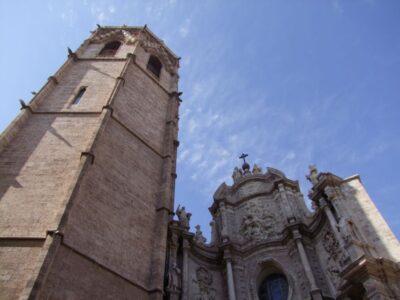
Essentials of Valencia and its World Heritage Sites
Read our review →
Valencia’s Greatest Food, History & Culture Tour
Read our review →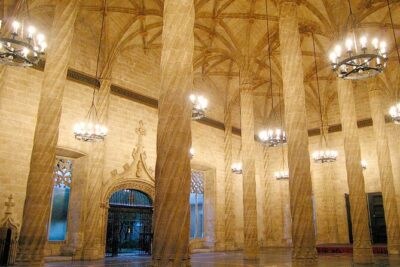
Essential Valencia and World Heritage Sites (English)
Read our review →
Browse the lists this tour appears in